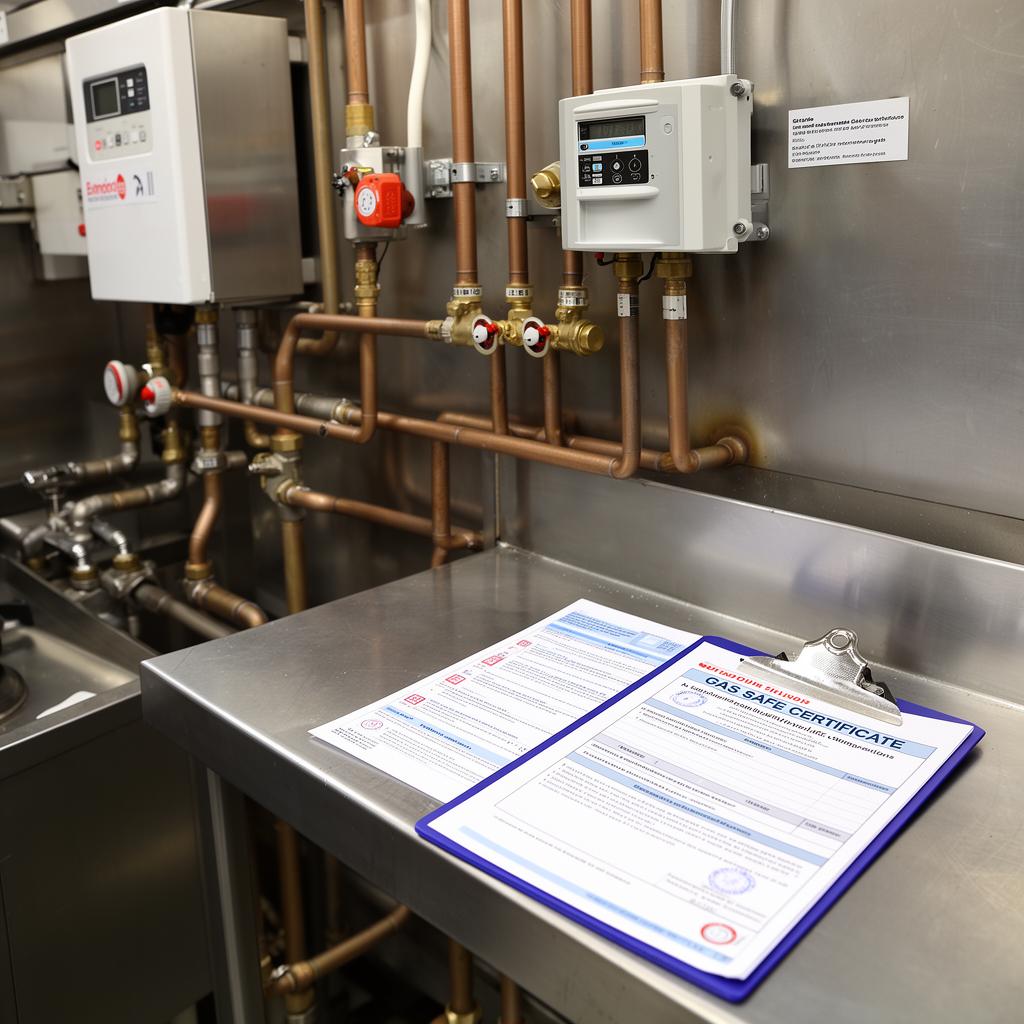
The legal basis for commercial gas meter regulations
Gas meter regulations in a commercial context draw from the Gas Safety (Installation and Use) Regulations 1998 and the wider Gas Act, which place duties on those responsible for a gas installation to keep it safe, alongside industry standards covering meter housing construction, ventilation, and pipework. Work on the site-side installation must be carried out by a Gas Safe registered engineer competent in commercial gas work.
Meter housing requirements
The meter housing — whether an external meter box, an internal meter cupboard, or a dedicated plant room — must provide suitable protection from damage and weather, adequate ventilation appropriate to the meter type, and reasonable access for reading, inspection, and maintenance. Housings that are blocked, damaged, or inadequately ventilated can compromise both safety and the ability to carry out routine checks.
On commercial premises, meter housings are sometimes shared by multiple tenants or combined into a meter bank, and it is important that access to each individual meter and its isolation valve remains clear, even where the wider plant room is used for other purposes.
Keeping meter housings clear
A common issue on commercial sites is meter housings or plant rooms being used for storage, which can obstruct access to the meter and emergency control valve. Keeping this space clear is a straightforward but important part of ongoing compliance.
The emergency control valve (ECV)
The ECV is the main valve used to shut off the entire gas supply to a premises in an emergency, and gas meter regulations require it to be readily accessible and clearly identifiable, usually located close to the meter. On larger commercial sites with multiple meters or complex pipework, there may be more than one ECV, and staff should know the location and operation of the one relevant to their area.
The ECV should not be obstructed by stock, equipment, or furniture, and its handle should move freely — a stiff or painted-over valve may not be operable quickly in an emergency, which defeats its purpose entirely.
Responsibility for meters versus site pipework
The meter itself remains the property of the gas transporter or meter asset manager, who is responsible for its maintenance and any faults with the meter unit. Everything downstream of the meter — including the meter housing in most cases, the ECV, and all distribution pipework and appliances — is typically the responsibility of whoever controls the premises, maintained by a Gas Safe registered engineer.
What to check during routine site visits
As part of ongoing commercial gas safety management, it's worth including the meter housing and ECV in routine checks: confirming access is clear, the housing is undamaged and properly ventilated, the ECV operates freely, and any labelling identifying the valve and the areas it serves remains legible and in place.
Getting your meter installation checked
If you're unsure whether your meter housing, ECV, or site-side pipework meets current commercial gas meter regulations, our Gas Safe registered engineers can carry out an inspection and advise on any remedial work. Call 0208 935 5572 to arrange a visit.
Signage and identification requirements
Clear, legible signage identifying the ECV and the areas of the premises it isolates is an important part of practical compliance, particularly on larger sites with multiple meters and valves serving different zones. Faded, missing, or inaccurate labelling can cost valuable time in a genuine emergency, when staff need to identify and operate the correct valve without delay.
As part of a routine inspection, our engineers check that signage remains accurate — especially after any changes to how a building is used or divided between tenants, which can easily leave old labelling out of date.
Commercial Gas Meter Regulations: frequently asked questions
What do commercial gas meter regulations cover?
- They cover the legal duty to maintain a safe installation under the Gas Safety (Installation and Use) Regulations 1998, along with practical requirements for meter housing, ventilation, and the accessibility of the emergency control valve.
What is the ECV and why does it matter?
- The ECV, or emergency control valve, is the main shut-off for the gas supply to a premises, and gas meter regulations require it to be accessible, clearly identifiable, and free to operate at all times.
Who is responsible for the meter housing?
- The meter itself belongs to the gas transporter or meter asset manager, but the meter housing and everything downstream, including the ECV and pipework, is generally the responsibility of whoever controls the premises.
Can stock or equipment be stored near the meter or ECV?
- No, gas meter regulations require clear access to both the meter and the ECV, so storage or equipment should never obstruct them.
Does ECV signage need to be kept up to date?
- Yes, labelling identifying the ECV and the areas it isolates should remain accurate and legible, and should be reviewed whenever a building's layout or tenancy arrangements change.
Need a commercial gas engineer in London?
Gas Safe registered commercial engineers, 24 hours a day. Call now or book online and we'll confirm a time.