Commercial Catering Gas London
Gas engineers for restaurants and commercial kitchens: appliances, interlocks, solenoid valves and CP42 certificates.
We work for restaurants, takeaways, hotels, pubs, school kitchens, hospital kitchens, staff canteens and dark kitchens across London, including City of London, Westminster, Camden, Islington, Hackney, Tower Hamlets, Southwark, Lambeth, Kensington & Chelsea, Hammersmith & Fulham, Wandsworth, Greenwich and every other borough.
Understanding commercial catering gas
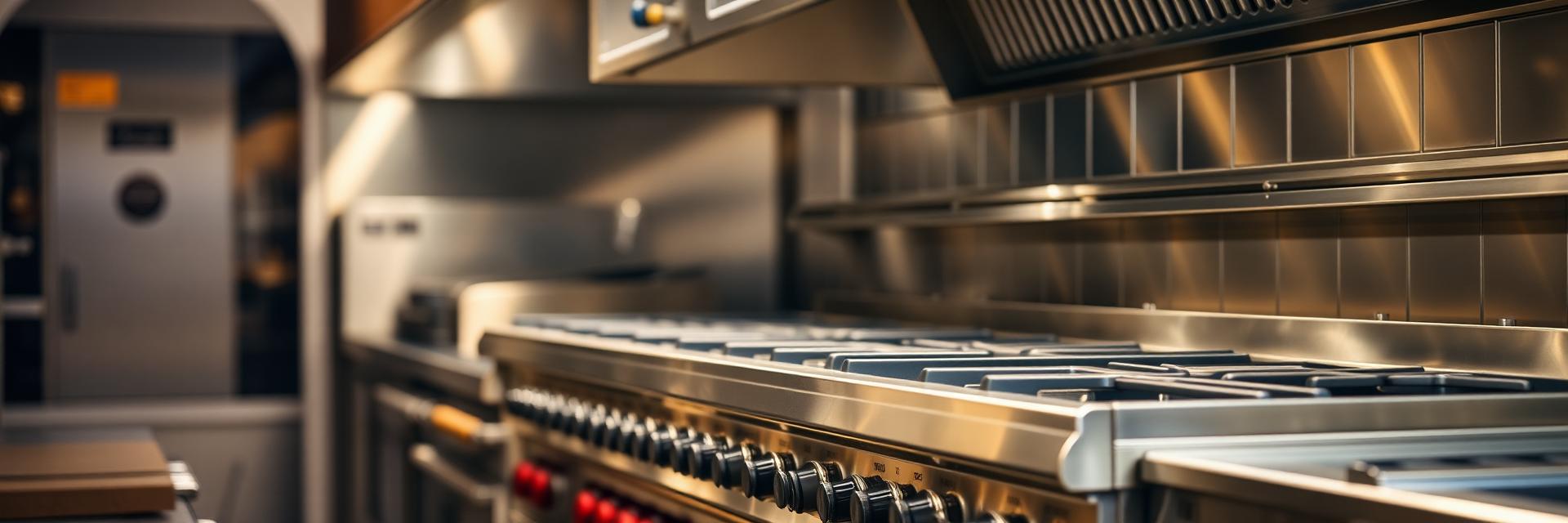
Commercial kitchens are some of the hardest-working gas installations in London. Ranges, fryers, ovens and chargrills run for long hours, and the gas supply must be interlocked with the extraction so that gas cannot flow unless ventilation is running. Our catering gas engineers install, repair and certify the whole kitchen.
Make an inventory of the gas appliances on the cooking line, including movable units, and show the engineer the extraction controls, emergency stop and gas isolation. Describe whether the fault affects one burner, one appliance or the whole kitchen. Record the appliance model and any error display; kitchens often contain several brands and age groups. Scheduling around preparation and service can reduce disruption, but a suspected leak or failed safety device cannot wait for a convenient quiet period.
Tell us what you need to keep running at the premises, what has stopped working and which equipment is involved. The correct starting point depends on the actual installation, not simply the description of a symptom. An engineer can then assess the site and explain whether the work is a safety inspection, a diagnosis, a repair or a planned change. If you have previous test or service records, make them available at the visit so any repeated issue can be investigated in context.
Selecting the appropriate work
Catering work considers the appliance and the kitchen as a system: gas rate, flame supervision, flexible connections, restraint, canopy extraction and any interlock all affect safe operation. A successful ignition test does not establish that an appliance is safe if ventilation fails or its flame-failure device does not shut off. Installation changes also need sufficient gas capacity and accessible isolation. Never bypass a trip, safety cut-out or interlock to keep service running.
There are 57 entries in this group, covering different appliances, checks or kinds of visit. Choose the page that matches the actual work you need rather than booking a general inspection in place of a repair. Some jobs require more than one stage: an installation may need testing, purging and commissioning; a breakdown may need diagnosis followed by a separately agreed repair. We will define the scope with you before additional work proceeds.
If more than one system is affected, identify a responsible person who can approve an isolation or a change in plan on site. Give the engineer access details for meters, plant rooms and controls as well as the appliance itself. Where tenants, staff or customers could lose heating, cooking or hot water, agree the suitable working window and contingency arrangements in advance. Safety concerns are dealt with before convenience or continuity of service.
Safety, competence and standards
Catering installations follow BS 6173 for appliance installation, IGEM/UP/19 for ventilation interlocks and the Gas Safety (Installation and Use) Regulations 1998, with CP42 certificates issued after inspection.
The engineer must hold the Gas Safe categories appropriate to the specific commercial appliance or work type. Check their ID card for the categories rather than assuming that registration for one gas appliance covers every commercial task. The relevant manufacturer's instructions and the installation's actual pressure, layout and condition inform the method used on site. Online descriptions can explain the process but cannot replace an on-site test, a current standard or the engineer's judgement.
Where a defect creates an unsafe situation, the affected appliance or part of the supply may have to stay isolated until the necessary repair is completed. Ask what remains usable, what must not be turned back on and what evidence is needed to return the equipment to service. A successful reset or a temporarily restored flame is not the same as diagnosing the underlying cause.
What to retain after the visit
Keep an up-to-date appliance list and the inspection or repair record with the kitchen manager. Note which units were checked, which were left isolated and any outstanding work on hoses, restraints, extraction or emergency shut-off. When a cooking line changes, update the gas and ventilation assessment before returning it to service. The person opening the kitchen on the next shift should know the status of every affected appliance.
Before the engineer leaves, make sure you know what was inspected, what was tested, which equipment is operating and which items need follow-up. Keep the report, relevant readings, certificate or commissioning record with the site's other gas documentation. An inspection certificate only covers its stated scope and date; it is not proof that unrelated equipment has been serviced. Where several teams manage the building, share outstanding defects and restrictions with the people operating the plant.
How to prepare for the engineer
Give the site address, a contact who can open the relevant areas and any instructions for loading, parking or induction. A photo of a data plate can identify the appliance, while a previous report may identify its last measured condition. Do not open a gas appliance or enter an unsafe area to gather information. If there is a meter room, roof plant, riser cupboard or kitchen control panel, make sure the responsible person knows how the engineer can reach it.
Explain the operational effect of isolating a supply: which occupants would lose heating, which kitchens must remain open and whether other equipment shares the same branch. The engineer may need to adjust the work sequence once the installation is inspected. Agree who can approve a change to scope on site; if that person is not available, essential follow-up can be delayed. Share any restrictions with the next shift, particularly when a safety defect means equipment cannot be used.
A quote, test record and certificate are not interchangeable. The quote describes proposed work; the record describes what actually happened and the results observed. Keep both with the asset history. If a defect is identified, ask for its location, what is safe to use now and what work is needed before any isolated section can be returned to service. That creates a practical next step for a landlord, kitchen manager or facilities team rather than just a list of technical terms.
The work in this category
Commercial Catering Gas Engineer: Gas Safe registered commercial catering gas engineers for kitchen installation, appliance repairs, interlocks and CP42 certificates across London. The work may include catering appliance installation and commissioning and interlock, solenoid and emergency shut-off work. It also covers repairs to ranges, fryers, ovens, grills and wok ranges and cp42 inspection and certification. Open the service page for its scope, preparation and handover information.
Takeaway Gas Engineer: Gas engineers for takeaways and dark kitchens: fryers, wok ranges, tandoors, grills and CP42 certificates. The work may include fryer, wok range, tandoor and grill repairs and cp42 certification. It also covers interlocks and emergency stops and evening and late call-outs. Open the service page for its scope, preparation and handover information.
Commercial Kitchen Gas Engineer: Commercial kitchen gas engineers for staff canteens, contract catering, central production units and dark kitchens. The work may include kitchen pipework and manifolds and appliance servicing. It also covers interlock testing and compliance records. Open the service page for its scope, preparation and handover information.
Gas Range Engineer: Commercial gas range engineers for open-top burners, solid tops and range ovens: repairs, servicing and installation. The work may include burner, pilot and ffd repairs and solid top and oven thermostat faults. It also covers gas rate and pressure checks and installation and restraints. Open the service page for its scope, preparation and handover information.
Gas Fryer Engineer: Commercial gas fryer engineers for Lincat, Valentine, Falcon, Pitco and Frymaster fryers: repairs, servicing and installation. The work may include high-limit and thermostat faults and pilot, ignition and burner repairs. It also covers gas valve replacement and safety checks after repair. Open the service page for its scope, preparation and handover information.
Gas Oven Engineer: Commercial gas oven engineers for convection, combination, pizza and deck ovens: repairs, servicing and installation. The work may include ignition and flame faults and thermostat and control repairs. It also covers fan and burner faults on convection and combi ovens and flue and ventilation checks. Open the service page for its scope, preparation and handover information.
Gas Grill Engineer: Commercial gas grill and griddle engineers: burner, ignition and thermostat repairs and servicing. The work may include burner and pilot repairs and griddle plate thermostat faults. It also covers ignition and ffd replacement and gas rate checks. Open the service page for its scope, preparation and handover information.
Gas Salamander Engineer: Commercial gas salamander grill engineers: radiant burner, ignition and flame supervision repairs. The work may include radiant burner and plaque repairs and ignition and pilot faults. It also covers flame failure device replacement and wall mounting and ventilation checks. Open the service page for its scope, preparation and handover information.
Gas Chargrill Engineer: Commercial gas chargrill engineers: burner, radiant and flame supervision repairs for steakhouses, grills and takeaways. The work may include burner and radiant repairs and ignition and ffd replacement. It also covers fat tray and grease fire risk checks and gas rate and pressure checks. Open the service page for its scope, preparation and handover information.
Gas Tandoor Engineer: Commercial gas tandoor engineers for Indian restaurants and takeaways: burner, flame supervision and installation work. The work may include burner and pilot repairs and flame supervision device replacement. It also covers installation, ventilation and restraint and cp42 checks. Open the service page for its scope, preparation and handover information.
Catering gas engineers
Commercial Catering Gas Engineer
Gas Safe registered commercial catering gas engineers for kitchen installation, appliance repairs, interlocks and CP42 certificates across London.
View serviceRestaurant Gas Engineer
Restaurant gas engineers for CP42 certificates, catering appliance repairs, extraction interlocks and solenoid valves across London.
View serviceHotel Gas Engineer
Hotel gas engineers for boilers, domestic hot water, kitchens, plant rooms and 24/7 breakdown cover across London.
View servicePub Gas Engineer
Pub gas engineers for kitchen CP42s, retrofit interlocks, small boiler plant and multi-site pub group contracts.
View serviceSchool Kitchen Gas Engineer
School gas engineers for boiler plant, kitchen CP42s, emergency stops in food rooms and science labs, and holiday works.
View serviceCare Home Gas Engineer
Care home gas engineers for heating and hot water reliability, kitchens, laundries, CO safety and priority breakdowns.
View serviceTakeaway Gas Engineer
Gas engineers for takeaways and dark kitchens: fryers, wok ranges, tandoors, grills and CP42 certificates.
View serviceCommercial Kitchen Gas Engineer
Commercial kitchen gas engineers for staff canteens, contract catering, central production units and dark kitchens.
View serviceCatering equipment engineers
Gas Range Engineer
Commercial gas range engineers for open-top burners, solid tops and range ovens: repairs, servicing and installation.
View serviceGas Fryer Engineer
Commercial gas fryer engineers for Lincat, Valentine, Falcon, Pitco and Frymaster fryers: repairs, servicing and installation.
View serviceGas Oven Engineer
Commercial gas oven engineers for convection, combination, pizza and deck ovens: repairs, servicing and installation.
View serviceGas Grill Engineer
Commercial gas grill and griddle engineers: burner, ignition and thermostat repairs and servicing.
View serviceGas Salamander Engineer
Commercial gas salamander grill engineers: radiant burner, ignition and flame supervision repairs.
View serviceGas Chargrill Engineer
Commercial gas chargrill engineers: burner, radiant and flame supervision repairs for steakhouses, grills and takeaways.
View serviceGas Tandoor Engineer
Commercial gas tandoor engineers for Indian restaurants and takeaways: burner, flame supervision and installation work.
View serviceGas Wok Range Engineer
Commercial gas wok range engineers: high-output burner, FFD, water and ignition repairs for Chinese and Asian kitchens.
View serviceCommercial Gas Water Heater Engineer
Commercial gas water heater engineers for kitchens and catering sites: storage and continuous-flow heater repairs and servicing.
View serviceCatering Appliance Installation
Installation of commercial gas catering appliances with flexible hoses and restraints.
View serviceCatering Appliance Repair
Repairs to commercial gas catering appliances during service hours or out of hours.
View serviceCatering compliance
CP42 Gas Certificate
CP42 gas certificates for commercial kitchens, restaurants and hotels.
View serviceGas Interlock Systems
Installation and repair of kitchen gas interlock systems to IGEM/UP/19.
View serviceGas Solenoid Valves
Supply, installation and replacement of gas solenoid valves for kitchens and plant rooms.
View serviceKitchen Ventilation Interlocks
Kitchen ventilation interlocks that stop gas flow if extraction fails.
View serviceEmergency Gas Shut-off
Emergency gas shut-off buttons and valves for kitchens, labs and plant rooms.
View serviceGas Detection
Fixed gas detection systems for plant rooms and kitchens, linked to automatic shut-off.
View serviceCatering appliance brands
Lincat
Lincat gas catering equipment repairs and servicing, including Opus 800 ranges, fryers and chargrills.
View serviceFalcon
Falcon Foodservice gas range, oven and fryer repairs and servicing.
View serviceBlue Seal
Blue Seal gas oven, range and fryer repairs and servicing.
View serviceRational
Rational gas combi oven repairs and servicing, including iCombi and SelfCookingCenter.
View serviceFrymaster
Frymaster gas fryer repairs and servicing for restaurants and quick-service kitchens.
View servicePitco
Pitco gas fryer repairs and servicing.
View serviceElectrolux Professional
Electrolux Professional gas range, oven and combi repairs and servicing.
View serviceMKN
MKN gas cooking equipment and combi steamer repairs and servicing.
View serviceCharvet
Charvet gas range and cooking suite repairs and servicing.
View serviceImperial
Imperial gas range, fryer and chargrill repairs and servicing.
View serviceMoffat
Moffat gas catering appliance repair and servicing in London, for gas-fired models where applicable. Tell us the exact model before booking so the appropriate engineer and procedure can be confirmed.
View serviceMoorwood Vulcan
Moorwood Vulcan gas catering appliance repair and servicing in London, for gas-fired models where applicable. Tell us the exact model before booking so the appropriate engineer and procedure can be confirmed.
View serviceParry
Parry gas catering appliance repair and servicing in London, for gas-fired models where applicable. Tell us the exact model before booking so the appropriate engineer and procedure can be confirmed.
View serviceBonnet
Bonnet gas catering appliance repair and servicing in London, for gas-fired models where applicable. Tell us the exact model before booking so the appropriate engineer and procedure can be confirmed.
View serviceGarland
Garland gas catering appliance repair and servicing in London, for gas-fired models where applicable. Tell us the exact model before booking so the appropriate engineer and procedure can be confirmed.
View serviceBertos
Bertos gas catering appliance repair and servicing in London, for gas-fired models where applicable. Tell us the exact model before booking so the appropriate engineer and procedure can be confirmed.
View serviceZanussi Professional
Zanussi Professional gas catering appliance repair and servicing in London, for gas-fired models where applicable. Tell us the exact model before booking so the appropriate engineer and procedure can be confirmed.
View serviceHobart
Hobart gas catering appliance repair and servicing in London, for gas-fired models where applicable. Tell us the exact model before booking so the appropriate engineer and procedure can be confirmed.
View serviceHoshizaki
Hoshizaki gas catering appliance repair and servicing in London, for gas-fired models where applicable. Tell us the exact model before booking so the appropriate engineer and procedure can be confirmed.
View serviceFagor
Fagor gas catering appliance repair and servicing in London, for gas-fired models where applicable. Tell us the exact model before booking so the appropriate engineer and procedure can be confirmed.
View serviceOlis
Olis gas catering appliance repair and servicing in London, for gas-fired models where applicable. Tell us the exact model before booking so the appropriate engineer and procedure can be confirmed.
View serviceInoksan
Inoksan gas catering appliance repair and servicing in London, for gas-fired models where applicable. Tell us the exact model before booking so the appropriate engineer and procedure can be confirmed.
View serviceAdande
Adande gas catering appliance repair and servicing in London, for gas-fired models where applicable. Tell us the exact model before booking so the appropriate engineer and procedure can be confirmed.
View serviceCleveland
Cleveland gas catering appliance repair and servicing in London, for gas-fired models where applicable. Tell us the exact model before booking so the appropriate engineer and procedure can be confirmed.
View serviceVulcan
Vulcan gas catering appliance repair and servicing in London, for gas-fired models where applicable. Tell us the exact model before booking so the appropriate engineer and procedure can be confirmed.
View serviceValentine
Valentine gas catering appliance repair and servicing in London, for gas-fired models where applicable. Tell us the exact model before booking so the appropriate engineer and procedure can be confirmed.
View serviceBlodgett
Blodgett gas catering appliance repair and servicing in London, for gas-fired models where applicable. Tell us the exact model before booking so the appropriate engineer and procedure can be confirmed.
View serviceBakers Pride
Bakers Pride gas catering appliance repair and servicing in London, for gas-fired models where applicable. Tell us the exact model before booking so the appropriate engineer and procedure can be confirmed.
View serviceConvotherm
Convotherm gas catering appliance repair and servicing in London, for gas-fired models where applicable. Tell us the exact model before booking so the appropriate engineer and procedure can be confirmed.
View serviceLainox
Lainox gas catering appliance repair and servicing in London, for gas-fired models where applicable. Tell us the exact model before booking so the appropriate engineer and procedure can be confirmed.
View serviceUnox
Unox gas catering appliance repair and servicing in London, for gas-fired models where applicable. Tell us the exact model before booking so the appropriate engineer and procedure can be confirmed.
View serviceMerrychef
Merrychef gas catering appliance repair and servicing in London, for gas-fired models where applicable. Tell us the exact model before booking so the appropriate engineer and procedure can be confirmed.
View serviceNeed a commercial gas engineer in London?
Gas Safe registered commercial engineers, 24 hours a day. Call now or book online and we'll confirm a time.
Brands we work on
Our Gas Safe engineers repair, service and install the commercial gas equipment found in London buildings. Choose a brand to see what we do.