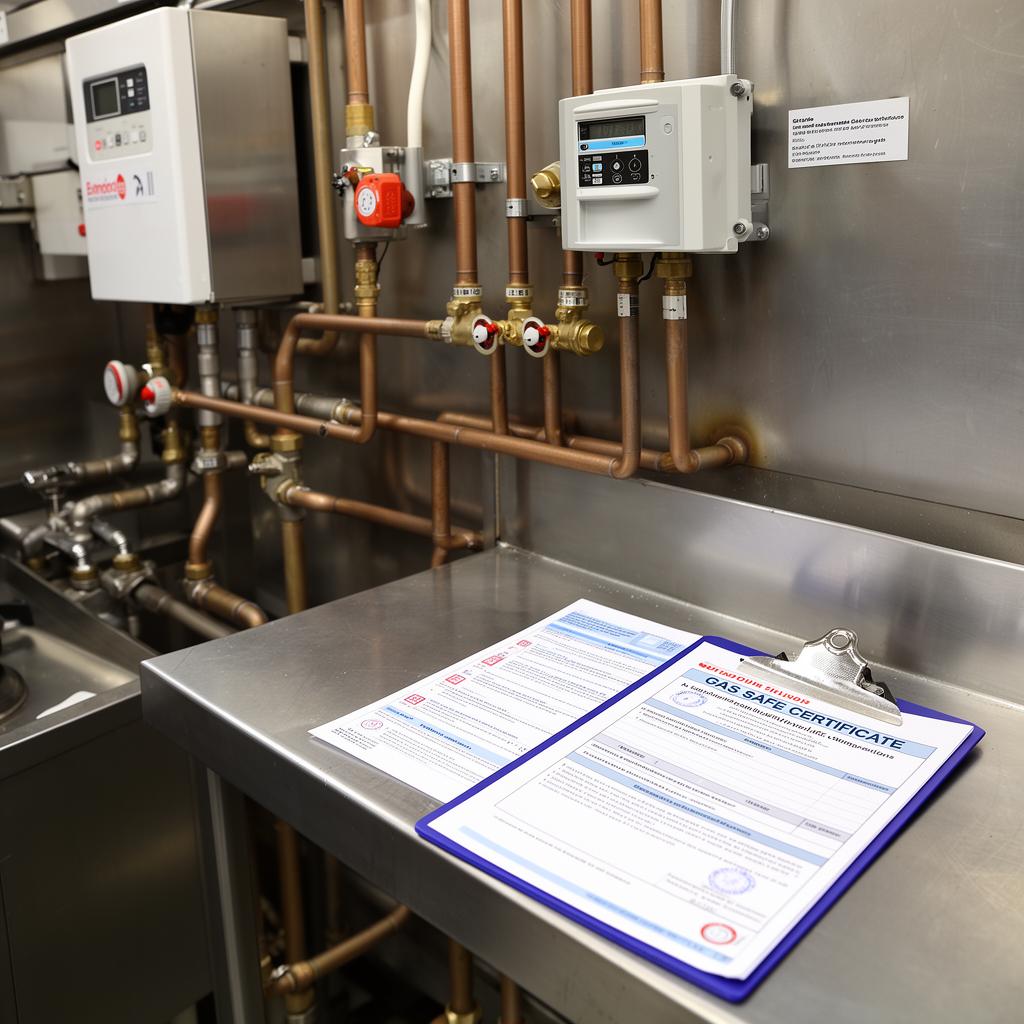
Commercial Gas Safety London
Commercial gas safety certificates, inspections and CP15, CP16, CP17, CP42 and CP44 certification in London.
We work for restaurants, cafés, takeaways, hotels, offices, schools, churches, food trucks and let commercial premises across London, including City of London, Westminster, Camden, Islington, Hackney, Tower Hamlets, Southwark, Lambeth, Kensington & Chelsea, Hammersmith & Fulham, Wandsworth, Greenwich and every other borough.
Understanding commercial gas safety
Business owners, landlords and managing agents have a legal duty to keep gas installations safe. A commercial gas safety inspection checks appliances, pipework, ventilation, flues and safety controls, and the certificate is what your insurer, landlord or environmental health officer will ask to see.
Confirm what record is actually needed before booking: an appliance commissioning record, a pipework test and purge record, an installation report or a catering inspection. They document different work and are not interchangeable. Provide the engineer with an appliance list, meter location, previous certificates and access to every affected space. If a certificate is due for renewal, allow enough time for remedial work; an inspection may find a defect that cannot be signed off on the first visit.
Tell us what you need to keep running at the premises, what has stopped working and which equipment is involved. The correct starting point depends on the actual installation, not simply the description of a symptom. An engineer can then assess the site and explain whether the work is a safety inspection, a diagnosis, a repair or a planned change. If you have previous test or service records, make them available at the visit so any repeated issue can be investigated in context.
Selecting the appropriate work
A certificate records what was inspected or tested within its stated scope and on a particular date. It should not be read as a guarantee for uninspected equipment or future condition. The engineer needs to determine the correct test method, relevant appliance categories and any unsafe-situation action from the actual installation. If a fault is found, ask which item is affected, whether it must remain disconnected and what must happen before it can be used again.
There are 9 entries in this group, covering different appliances, checks or kinds of visit. Choose the page that matches the actual work you need rather than booking a general inspection in place of a repair. Some jobs require more than one stage: an installation may need testing, purging and commissioning; a breakdown may need diagnosis followed by a separately agreed repair. We will define the scope with you before additional work proceeds.
If more than one system is affected, identify a responsible person who can approve an isolation or a change in plan on site. Give the engineer access details for meters, plant rooms and controls as well as the appliance itself. Where tenants, staff or customers could lose heating, cooking or hot water, agree the suitable working window and contingency arrangements in advance. Safety concerns are dealt with before convenience or continuity of service.
Safety, competence and standards
Inspections are carried out under the Gas Safety (Installation and Use) Regulations 1998 and the Gas Safety (Management) Regulations 1996, with tightness tests to IGEM/UP/1 or UP/1A, and catering inspections to BS 6173.
The engineer must hold the Gas Safe categories appropriate to the specific commercial appliance or work type. Check their ID card for the categories rather than assuming that registration for one gas appliance covers every commercial task. The relevant manufacturer's instructions and the installation's actual pressure, layout and condition inform the method used on site. Online descriptions can explain the process but cannot replace an on-site test, a current standard or the engineer's judgement.
Where a defect creates an unsafe situation, the affected appliance or part of the supply may have to stay isolated until the necessary repair is completed. Ask what remains usable, what must not be turned back on and what evidence is needed to return the equipment to service. A successful reset or a temporarily restored flame is not the same as diagnosing the underlying cause.
What to retain after the visit
Check that the document shows the site, relevant appliances or test section, date, engineer details, readings where required and clearly stated defects. Store it alongside remedial evidence, previous reports and a current asset list. Give a copy to the responsible site manager and note the next review date in your own compliance schedule. Do not assume a generic form replaces a more specific commissioning or test record required for the job.
Before the engineer leaves, make sure you know what was inspected, what was tested, which equipment is operating and which items need follow-up. Keep the report, relevant readings, certificate or commissioning record with the site's other gas documentation. An inspection certificate only covers its stated scope and date; it is not proof that unrelated equipment has been serviced. Where several teams manage the building, share outstanding defects and restrictions with the people operating the plant.
How to prepare for the engineer
Give the site address, a contact who can open the relevant areas and any instructions for loading, parking or induction. A photo of a data plate can identify the appliance, while a previous report may identify its last measured condition. Do not open a gas appliance or enter an unsafe area to gather information. If there is a meter room, roof plant, riser cupboard or kitchen control panel, make sure the responsible person knows how the engineer can reach it.
Explain the operational effect of isolating a supply: which occupants would lose heating, which kitchens must remain open and whether other equipment shares the same branch. The engineer may need to adjust the work sequence once the installation is inspected. Agree who can approve a change to scope on site; if that person is not available, essential follow-up can be delayed. Share any restrictions with the next shift, particularly when a safety defect means equipment cannot be used.
A quote, test record and certificate are not interchangeable. The quote describes proposed work; the record describes what actually happened and the results observed. Keep both with the asset history. If a defect is identified, ask for its location, what is safe to use now and what work is needed before any isolated section can be returned to service. That creates a practical next step for a landlord, kitchen manager or facilities team rather than just a list of technical terms.
The work in this category
Commercial Gas Safety Certificate: Commercial gas safety certificates for offices, shops, restaurants and let commercial premises. The work may include appliance safety checks and pipework tightness test. It also covers ventilation and flue checks and certificate issued on the day. Open the service page for its scope, preparation and handover information.
Commercial Gas Safety Inspection: Full commercial gas safety inspections of appliances, pipework, flues and ventilation. The work may include visual and operational checks and combustion and flue testing. It also covers safety control testing and written report of defects and fixes. Open the service page for its scope, preparation and handover information.
CP15: CP15 commissioning records for new non-domestic gas appliances and plant. The work may include commissioning of new appliances and gas rate and pressure recording. It also covers safety device checks and cp15 record issued. Open the service page for its scope, preparation and handover information.
CP16: CP16 gas testing and purging certificates for commercial pipework. The work may include strength and tightness testing and purge calculations and purge. It also covers test results recorded and cp16 certificate issued. Open the service page for its scope, preparation and handover information.
CP17: CP17 gas installation safety reports for non-domestic installations. The work may include installation survey and pipework and meter checks. It also covers ventilation and labelling checks and cp17 report issued. Open the service page for its scope, preparation and handover information.
CP44: CP44 gas safety certificates for mobile catering vehicles and trailers using LPG. The work may include lpg cylinder and hose checks and appliance and ffd testing. It also covers ventilation checks and cp44 certificate issued. Open the service page for its scope, preparation and handover information.
Commercial Gas Compliance: Commercial gas compliance management: certificates, records, remedials and reminders. The work may include compliance audit of your sites and certificate tracking and renewals. It also covers remedial works to clear defects and records ready for insurers and inspectors. Open the service page for its scope, preparation and handover information.
Annual Gas Safety Inspection: Annual commercial gas safety inspections with reminders so certificates never lapse. The work may include booked annual visits and inspection and certificate. It also covers defect reports and renewal reminders. Open the service page for its scope, preparation and handover information.
Commercial Gas Safety we provide
Commercial Gas Safety Certificate
Commercial gas safety certificates for offices, shops, restaurants and let commercial premises.
View serviceCommercial Gas Safety Inspection
Full commercial gas safety inspections of appliances, pipework, flues and ventilation.
View serviceCP15
CP15 commissioning records for new non-domestic gas appliances and plant.
View serviceCP16
CP16 gas testing and purging certificates for commercial pipework.
View serviceCP17
CP17 gas installation safety reports for non-domestic installations.
View serviceCP42
CP42 gas certificates for commercial kitchens, restaurants and hotels.
View serviceCP44
CP44 gas safety certificates for mobile catering vehicles and trailers using LPG.
View serviceCommercial Gas Compliance
Commercial gas compliance management: certificates, records, remedials and reminders.
View serviceAnnual Gas Safety Inspection
Annual commercial gas safety inspections with reminders so certificates never lapse.
View serviceNeed a commercial gas engineer in London?
Gas Safe registered commercial engineers, 24 hours a day. Call now or book online and we'll confirm a time.
Brands we work on
Our Gas Safe engineers repair, service and install the commercial gas equipment found in London buildings. Choose a brand to see what we do.