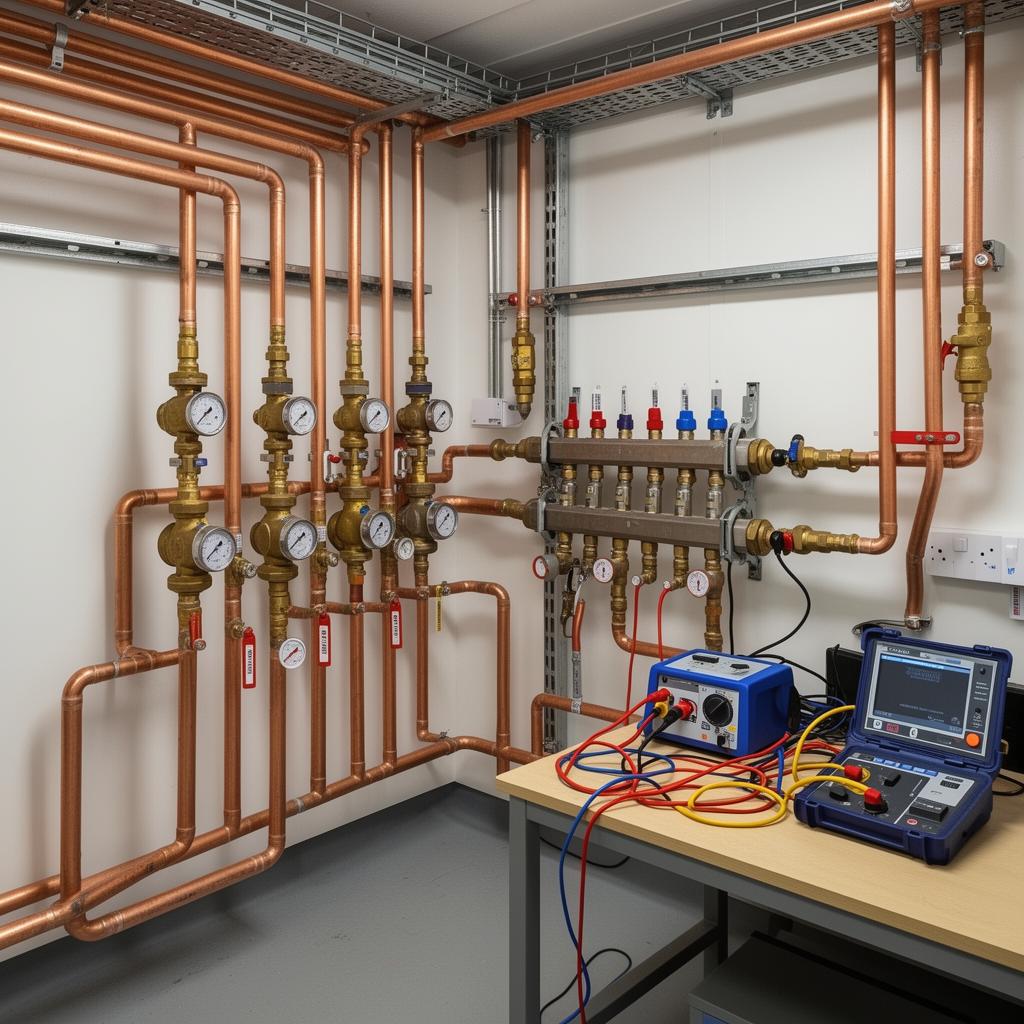
What a commercial gas connection involves
A commercial gas connection project typically has several distinct stages: establishing demand, arranging the supply with the relevant gas transporter, installing pipework and a meter housing to receive the meter, and commissioning the completed installation once the meter is live. Each stage needs to be planned in sequence, since later work depends on decisions made earlier — particularly the demand figure, which determines pipework and meter sizing.
Arranging the supply with a gas transporter
For a new premises, or a site needing its gas meter connections upgraded significantly, the gas transporter responsible for the local network needs to bring or confirm a supply to the property boundary. This process runs alongside — but separately from — the Gas Safe engineer's work on site, and timescales for transporter works should be factored into any project programme from the outset.
Multi-occupancy and commercial developments
Larger developments with multiple units, such as a parade of shops or a serviced office building, often need multiple gas meter connections installed in a coordinated meter bank, which requires careful planning of pipework routes and housing to serve each unit separately while keeping the overall installation manageable to maintain.
Pipework and meter housing installation
Once the transporter's supply is confirmed, pipework and the meter housing are installed to receive the meter, following current standards for pipework sizing and installation such as IGEM/UP/2 and BS 6891 where applicable. This includes fitting the emergency control valve in an accessible location and ensuring adequate ventilation to the meter housing.
Connecting appliances to the new supply
With the meter connection complete, distribution pipework is run or connected to serve individual appliances, sized to maintain correct operating pressure at each appliance under full simultaneous demand. Where an existing installation is being extended rather than built new, this stage often involves tying new pipework into the existing system at an appropriate point.
Commissioning a new gas meter connection
Before the installation is handed over for use, the completed pipework and appliances are purged of air, tested for tightness, and checked for correct operating pressure at each appliance. This commissioning stage confirms the whole connection — not just the meter itself — is functioning safely, and forms part of the documentation for the site.
Arranging your gas meter connection
Whether you need a brand new commercial gas connection, an upgrade to existing meter connections, or support coordinating transporter works with site-side installation, our engineers can manage the project from demand assessment through to commissioning. Call 0208 935 5572 to discuss your requirements.
Choosing a gas supplier after connection
Once a commercial gas meter connection is physically in place, the premises still needs an active supply contract with a gas supplier before gas can legally be used, and this is a commercial arrangement entirely separate from the technical connection work carried out by the transporter and the Gas Safe engineer. Businesses are free to choose and switch suppliers, and it is worth arranging a contract in good time so the supply is live as soon as the installation is ready.
Temporary and metered supplies for short-term use
Some commercial situations, such as a temporary catering unit at an event or a short-term construction site office, call for a temporary gas meter connection rather than a permanent installation. These still require the same core process of demand assessment, compliant pipework, and commissioning, scaled to the duration and nature of the temporary use.
Planning a commercial gas meter connection around your building
A commercial gas meter connection is easier when it is planned alongside the rest of the building work. Agree early where the meter housing or meter room will sit, how the outlet pipework will reach the plant room or kitchen, and where the emergency control valve and any additional isolation valves will be. Routes through occupied areas, ceiling voids or shared risers may need fire stopping, sleeving and ventilation, and these details are far cheaper to settle on drawings than after ceilings are closed.
Timing matters as much as layout. The transporter's connection date, the engineer's tightness test and purge, and the commissioning of each appliance need to follow in sequence, so a delay at one stage moves the others. Booking the site-side engineer once the connection date is confirmed, and keeping the installation drawings and pipe sizing calculations to hand, helps the meter go live and the appliances run on the same visit wherever possible.
After the connection, keep the commissioning records, the tightness test result and the as-installed pipework details together with your building records. They are the first documents an insurer, a landlord or a future engineer will ask for.
Commercial Gas Meter Connection Services: frequently asked questions
What is involved in a commercial gas meter connection?
- It typically involves assessing demand, arranging supply with the gas transporter, installing pipework and a meter housing, and commissioning the installation once the meter is connected and live.
Can you coordinate transporter works for a commercial gas connection?
- We liaise with the relevant gas transporter on supply timescales and requirements, while carrying out all the site-side pipework and appliance work ourselves.
Do multi-unit developments need separate gas meter connections?
- Yes, each unit in a multi-occupancy development typically needs its own gas meter connection, often grouped together in a coordinated meter bank for ease of access and maintenance.
Is commissioning included after a new connection is completed?
- Yes, we purge, tightness test, and check operating pressures across the new pipework and appliances before handing the installation over for normal use.
Do I still need a supplier contract after the meter connection is installed?
- Yes, the physical connection and the gas supply contract are separate, so you will need an active agreement with a gas supplier before the premises can legally use gas.
Need a commercial gas engineer in London?
Gas Safe registered commercial engineers, 24 hours a day. Call now or book online and we'll confirm a time.