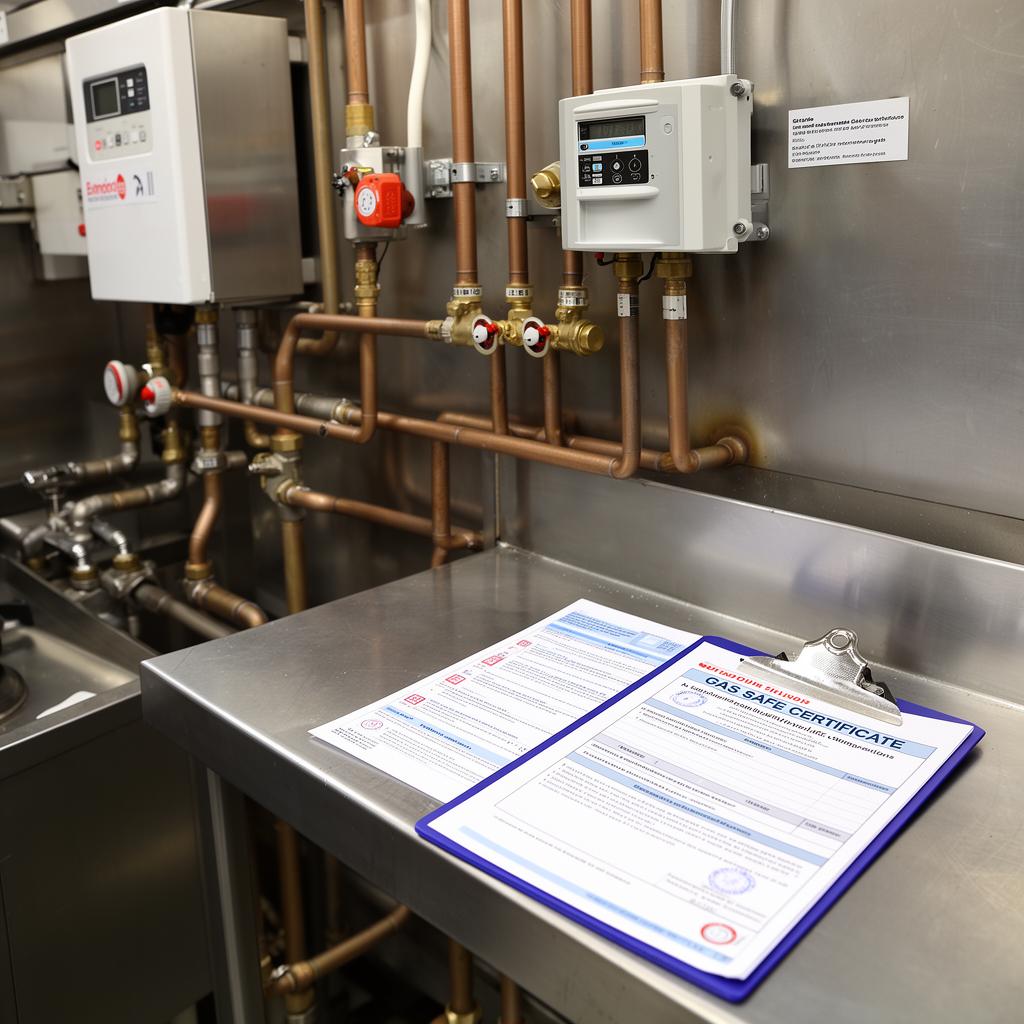
Commercial gas tightness test regulations: The legal framework behind tightness testing
The Gas Safety (Installation and Use) Regulations 1998, made under the Gas Act, place duties on those responsible for gas installations to ensure pipework and appliances are maintained in a safe condition. These regulations do not themselves prescribe the technical steps of a tightness test, but they are the legal basis for why testing is required before an installation is used or returned to service.
Work on commercial gas installations must be carried out by an engineer registered with Gas Safe Register, and competent in the type of work being undertaken — testing is included within this duty, not treated as a separate activity that can be skipped.
IGEM technical standards for tightness testing
The detailed technical procedure for a commercial gas safe tightness test is set out in IGEM/UP/1, covering domestic and smaller commercial installations, with IGEM/UP/1A and IGEM/UP/1B extending guidance to larger premises and industrial and commercial installations respectively. Larger or more complex supplies may also reference IGEM/UP/2 for pipework sizing considerations that interact with testing.
These standards specify stabilisation periods, test durations, permitted pressure drop, and how results should be interpreted for different installation volumes and gauge types. Engineers should always check the current edition in force, since these documents are periodically reviewed and updated by IGEM.
Industrial supplies and IGEM/UP/1B
For larger industrial and commercial supplies, particularly those downstream of larger meters or governors, IGEM/UP/1B provides guidance tailored to higher pressures and greater pipework volumes than the domestic-focused standard covers.
Who is responsible for compliance
Responsibility for arranging tightness testing generally sits with whoever has control of the premises or the gas installation — often the landlord, tenant, or facilities manager depending on the lease and the nature of the work. The actual test, however, must only be carried out by a competent, Gas Safe registered engineer.
Where multiple parties share responsibility for different parts of an installation — for example a landlord responsible for a riser and a tenant responsible for appliance pipework — it is worth clarifying in writing who is responsible for which section before testing is arranged, to avoid gaps in compliance.
Record-keeping and evidence of compliance
While the regulations do not mandate one single certificate format for a tightness test in isolation, keeping a clear record of the test performed — including date, pressures recorded, duration, and outcome — supports the wider duty to demonstrate that an installation has been maintained safely, and is commonly requested during insurance reviews or landlord gas safety checks.
How regulations interact with new work and alterations
Tightness testing is not a one-off requirement limited to the original installation. Any alteration, extension, or repair to pipework typically requires the affected section — and often the wider system — to be re-tested before it is used, since the regulations focus on the safety of the installation as it currently exists rather than as it was originally installed.
This is particularly relevant on commercial premises undergoing refurbishment or fit-out, where new appliances or relocated pipework are common and testing is easily overlooked amid other building works.
Getting compliant testing arranged
If you are unsure whether your premises meets current commercial gas tightness test regulations, our Gas Safe registered engineers can review your installation, carry out testing to the current IGEM standards, and provide records to support your compliance. Call 0208 935 5572 to discuss your site.
Insurance and lease implications of non-compliance
Beyond the direct safety risk, failing to maintain evidence of compliant tightness testing can affect commercial insurance cover, since insurers often expect gas installations to have been maintained and tested in line with current regulations as a condition of a policy responding to a claim. Lease agreements for commercial premises also frequently place specific gas safety obligations on landlords, tenants, or both, and tightness testing records are a practical way of demonstrating those obligations have been met.
Where a dispute arises over responsibility for an installation — for example during a change of tenancy — having clear, dated testing records available avoids ambiguity about when a system was last confirmed safe and by whom.
Commercial Gas Tightness Test Regulations: frequently asked questions
What regulations cover commercial gas tightness testing?
- The Gas Safety (Installation and Use) Regulations 1998 create the legal duty for safe installations, while IGEM/UP/1, IGEM/UP/1A and IGEM/UP/1B set out the technical testing procedure engineers follow.
Does a gas safe tightness test need a specific certificate?
- There is no single mandated certificate for testing alone, but keeping a clear record of pressures, duration and outcome supports your wider gas safety compliance.
Who is legally responsible for arranging testing?
- Whoever has control of the gas installation under their tenancy or ownership arrangement is generally responsible for arranging testing, though it must always be carried out by a Gas Safe registered engineer.
Do alterations to pipework trigger a new tightness test requirement?
- Yes, any alteration or repair to pipework typically requires the affected section, and often the wider system, to be re-tested before being brought back into use.
Can poor tightness testing records affect insurance cover?
- Yes, insurers commonly expect evidence that gas installations have been maintained and tested in line with current regulations, so keeping clear testing records helps support a claim if one is ever needed.
Need a commercial gas engineer in London?
Gas Safe registered commercial engineers, 24 hours a day. Call now or book online and we'll confirm a time.