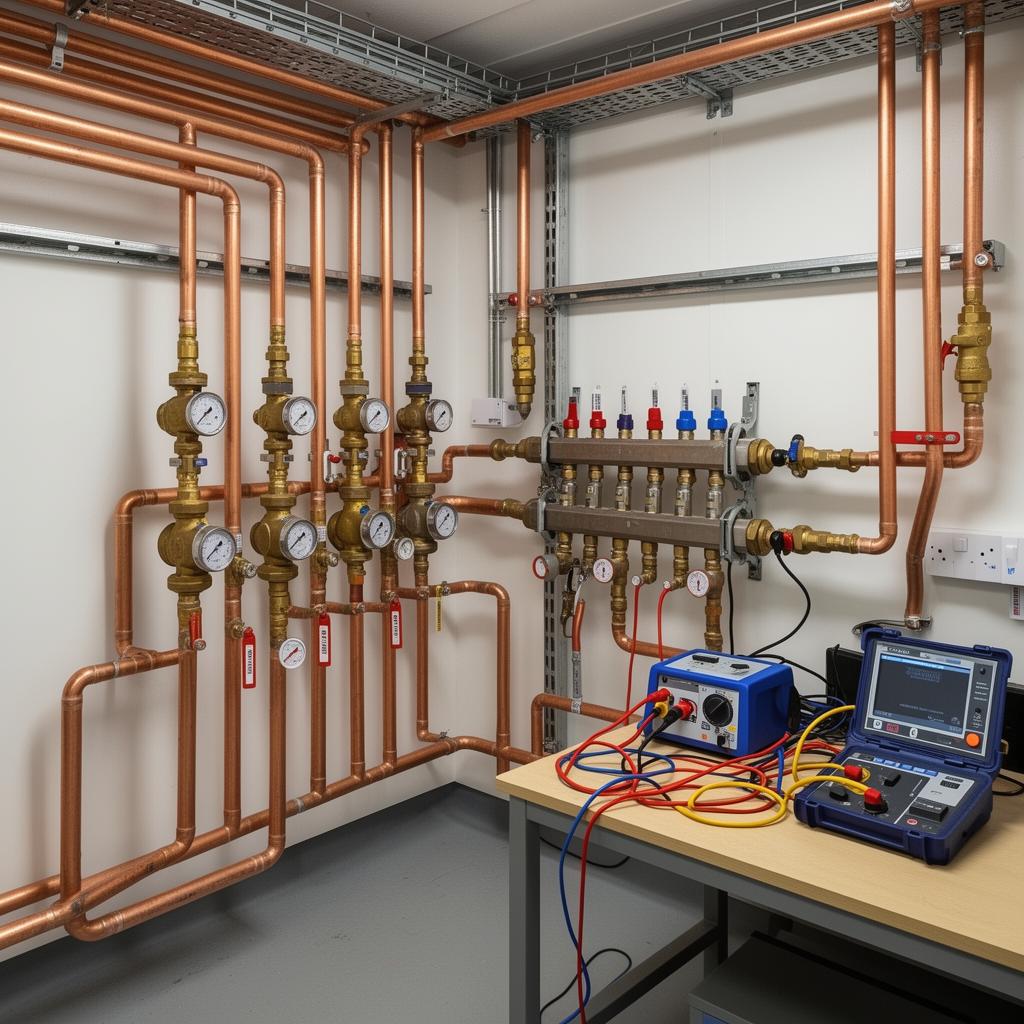
Commercial gas tightness test procedure: What is a gas tightness test and why it is carried out
A gas tightness test, sometimes referred to informally as a gas drop test, checks whether an installation pipework system loses pressure over a set period of time. A pressure drop beyond the permitted tolerance indicates a leak somewhere in the system, which must be found and corrected before the installation can be certified as safe.
Tightness tests are carried out as a routine part of new installation work, after alterations or extensions to existing pipework, and periodically as part of ongoing commercial gas safety management, particularly where pipework has been disturbed or appliances have been added or removed.
Step one: isolation and preparation
The engineer first identifies the section of pipework to be tested and closes the relevant isolation valves so that appliances and, where necessary, the meter are excluded from the test. Open ends are capped or plugged, and any appliance connections left in place are checked to ensure they will not affect the result.
At this stage the engineer also selects a gauge appropriate to the volume of pipework involved, since the sensitivity required differs between a short branch and a large diameter riser serving several floors.
Step two: pressurisation and stabilisation
The pipework is pressurised to the test pressure specified for the installation, then left for a stabilisation period so that the gas temperature equalises with its surroundings. Skipping or shortening this stage risks a false result, since temperature movement alone can mimic the appearance of a leak on the gauge.
Reading the gauge correctly
Once stabilisation is complete, the engineer records the starting pressure and begins timing the test period itself, watching the gauge for any fall that exceeds the permitted tolerance for that volume of pipework and gauge type.
Step three: the test period and let-by checks
During the timed test period, the engineer monitors the gauge without disturbing the system. If the pressure holds within tolerance, the installation is deemed tight. If it does not, the engineer will investigate further — checking joints, fittings and valves — to locate the source before any remedial work is carried out and the test repeated.
A let-by test may also be carried out on specific valves, such as an emergency control valve or appliance isolation valve, to confirm the valve itself is seating correctly and not allowing gas to pass when closed.
Step four: fault finding if the test fails
Where a tightness test fails, the usual next step is to apply leak detection fluid to joints and fittings in the suspect section, watching for bubbles that reveal the exact point of leakage. On larger commercial systems this can mean sectioning the pipework and re-testing shorter runs individually to narrow down the fault.
Once a leak is found and repaired, the full tightness test procedure — including stabilisation — is repeated from the start, since a partial re-test would not give a reliable confirmation that the repair has resolved the issue.
Step five: recording and certification
A successful tightness test is recorded, including the pressure readings taken, the duration applied, and the gauge used, as part of the documentation for the installation or the ongoing gas safety record for the premises. This record supports the wider commercial gas safety compliance for the site.
When to call an engineer for a tightness test
If you are commissioning new pipework, extending an existing system, or simply unsure when your commercial installation was last tested, our engineers can carry out the full tightness test procedure and advise on any remedial work needed. Call 0208 935 5572 to arrange a visit.
Equipment used during the procedure
Engineers carry a range of manometers and digital gauges suited to different pipework volumes, along with leak detection fluid, caps and plugs for isolating open ends, and adaptors for connecting to test points on different meter and valve types. Using the correct gauge for the volume being tested is not a matter of preference — the sensitivity of the gauge is matched to the installation so that a genuine leak produces a reading that can be clearly distinguished from normal thermal movement.
Digital gauges can offer finer resolution and sometimes log results automatically, which is useful for record-keeping on larger commercial contracts, while a traditional liquid manometer remains a reliable and widely used option across most routine commercial testing.
Keeping test equipment calibrated
Gauges used for tightness testing need to be properly maintained and, where applicable, calibrated so that readings can be trusted. An engineer turning up with a damaged or uncalibrated gauge undermines the whole point of the test, which is why reputable contractors treat their test equipment as seriously as any other part of the job.
Commercial Gas Tightness Test Procedure: frequently asked questions
What is a gas tightness test?
- A gas tightness test checks whether commercial pipework holds pressure over a defined period without leaking, following the procedure set out in the current edition of IGEM/UP/1.
How long does the tightness test procedure take?
- Duration depends on the volume of pipework and the gauge used, with larger systems generally needing longer stabilisation and test periods; our tightness test times guide explains this in more detail.
What happens if the test fails?
- The engineer investigates using leak detection fluid or by sectioning the pipework to locate the fault, repairs it, and then repeats the full procedure from stabilisation onward.
Is a gas drop test the same as a tightness test?
- Gas drop test is an informal term often used for the same procedure — monitoring a pressure drop over time to check the integrity of the pipework.
What equipment does an engineer use for a tightness test?
- Engineers use manometers or digital gauges matched to the pipework volume, along with caps, plugs and leak detection fluid, selecting equipment appropriate to the installation being tested.
Need a commercial gas engineer in London?
Gas Safe registered commercial engineers, 24 hours a day. Call now or book online and we'll confirm a time.