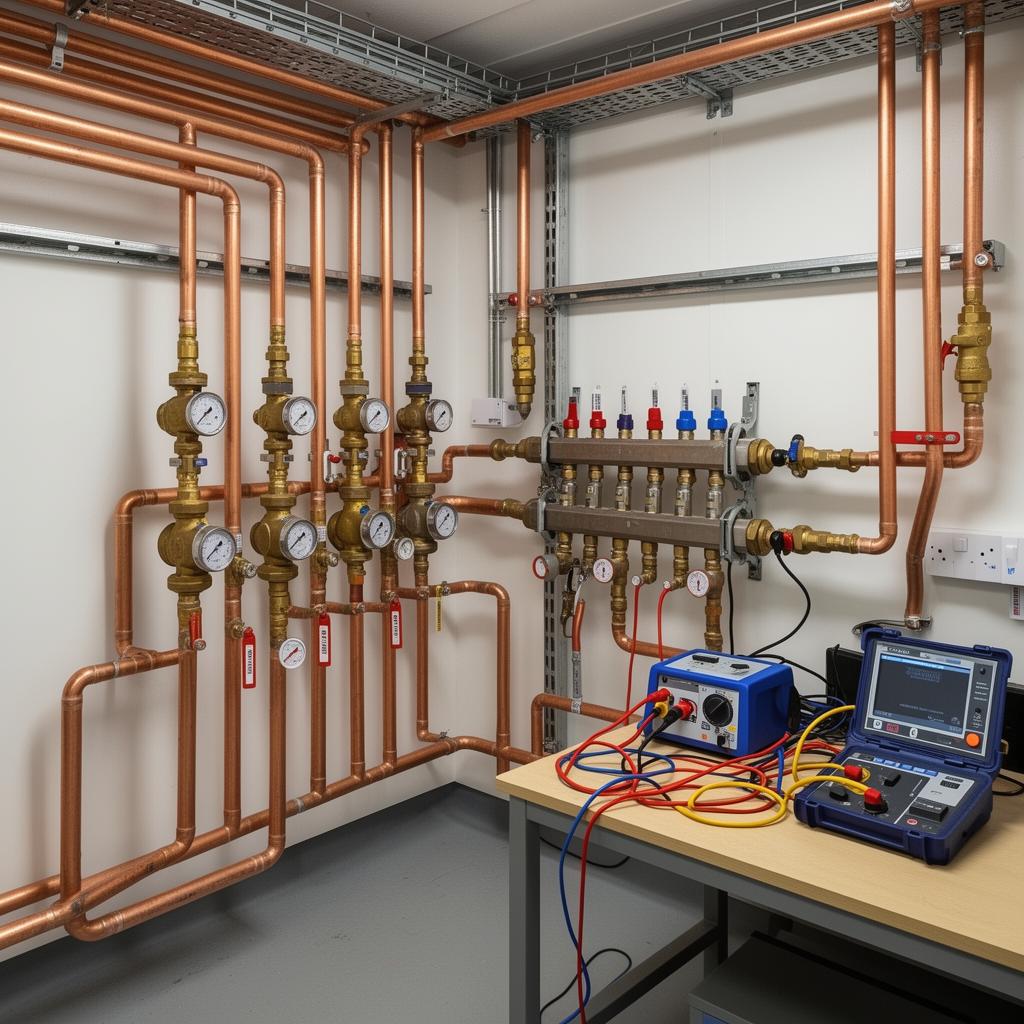
Who does what in a commercial gas meter installation
It is worth being clear from the outset about roles, because confusion here causes delays. The meter itself — the physical asset measuring gas use — is owned, installed, and maintained by a gas transporter or meter asset manager, not by a general Gas Safe registered engineer. A business gas meter installation therefore typically has two distinct strands running alongside each other: the transporter or meter asset manager's work to bring a new or upgraded meter to the property boundary or internal meter position, and the Gas Safe engineer's work on the pipework, meter housing, and appliances beyond that point.
Our role covers the second strand: assessing your demand, designing and installing compliant pipework up to and from the meter position, fitting or confirming the emergency control valve, and commissioning appliances once the meter is live. We liaise with the transporter-side process so the two strands come together on a realistic timescale.
Assessing demand before installation
Before any commercial meter installation takes place, we calculate the peak simultaneous gas demand of the premises based on the appliances and equipment to be connected, which determines the meter capacity required. This figure is passed to the transporter or meter asset manager so the correct size of meter is specified for the site.
New connections versus upgrades
A new connection to a premises with no existing gas supply involves coordinating a transporter's main-laying and service work alongside our site-side pipework design, while an upgrade to an existing meter — for example where demand has grown — is usually a more contained process focused on replacing the meter and adjusting pipework to suit the new capacity.
Pipework design and installation around the meter
Pipework immediately downstream of the meter, including the meter housing, emergency control valve, and distribution pipework to appliances, must be designed and installed to current standards, referencing IGEM/UP/2 for sizing and BS 6891 where relevant to the pressure and application. We handle this design and installation work as part of a commercial gas meter installations project, ensuring the pipework matches the meter's rated capacity.
Meter housing, access and ventilation
The meter housing or meter box must provide adequate protection, access for reading and maintenance, and ventilation appropriate to the meter type and location. Whether the meter sits in an external box, an internal meter room, or a dedicated plant room, the housing needs to meet the requirements that apply to that type of installation.
Commissioning after meter installation
Once the meter is live, we commission the downstream pipework and appliances, including purging air from new pipework, carrying out a tightness test, and checking that appliances achieve correct operating pressure. This final stage confirms the installation as a whole — meter, pipework and appliances — is safe and performing as intended before the site is handed back for normal use.
Arranging your commercial gas meter installation
If you are planning a new connection, a meter upgrade, or simply need the site-side pipework and appliance work managed around a transporter's meter installation, our Gas Safe registered engineers can carry out the demand assessment, design and installation work. Call 0208 935 5572 to get started.
Typical timescales for a commercial installation
Timescales for a commercial gas meter installation vary considerably depending on whether it's a straightforward upgrade or a new connection requiring transporter main-laying. A meter upgrade on an existing, well-documented site can sometimes be arranged relatively quickly, while a new connection to a premises with no existing supply depends heavily on the transporter's own programme for bringing a service to the building, which is outside our direct control.
We factor realistic timescales into project planning from the outset and keep you updated on progress with the transporter-side work alongside our own site-side programme, so there are no surprises as the project develops.
Commercial Gas Meter Installation: frequently asked questions
Who installs the meter in a commercial gas meter installation?
- The meter asset itself is installed by the gas transporter or meter asset manager, while a Gas Safe registered engineer handles the pipework, meter housing, and appliance connections on the site side.
How is demand assessed for a business gas meter installation?
- We calculate the peak simultaneous demand of all connected appliances and equipment, which determines the meter capacity requested from the transporter or meter asset manager.
Does commercial meter installation include pipework design?
- Yes, we design and install pipework downstream of the meter to current standards, sized to match the meter's rated capacity and the demand of the appliances it serves.
What happens after the meter is fitted?
- We commission the downstream pipework and appliances, including purging, tightness testing, and checking operating pressures, before the installation is returned to normal use.
How long does a commercial gas meter installation take?
- It depends on the scope: a meter upgrade on an existing site can often be arranged relatively quickly, while a new connection depends on the transporter's own timescale for bringing a supply to the building.
Need a commercial gas engineer in London?
Gas Safe registered commercial engineers, 24 hours a day. Call now or book online and we'll confirm a time.