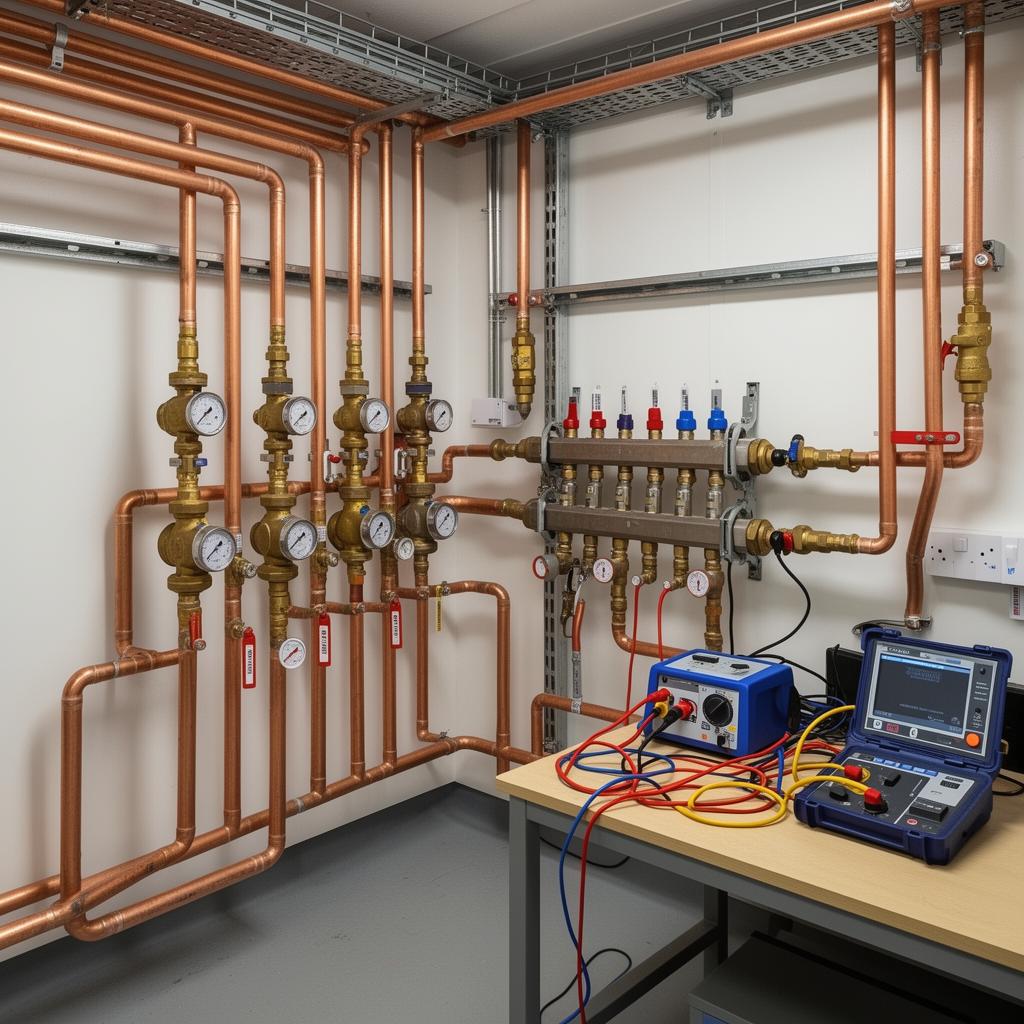
Gas Testing South Kensington for Commercial Premises
Commercial gas testing establishes whether the installation and appliances within the agreed scope are safe to use. It can involve checking pipework for leaks, assessing operating pressures, examining combustion and confirming that safety controls work correctly. The appropriate checks depend on the gas supply, installation size, appliance types and reason for the visit.
South Kensington combines restaurants, cafés, hotels, educational premises and residential buildings with shared gas plant. A catering kitchen around Old Brompton Road needs a different assessment from a communal boiler installation near Queen’s Gate. We establish the purpose of the inspection first, whether it concerns routine maintenance, a suspected defect, reopening premises or changes to gas equipment.
Defining Your South Kensington Testing Scope
Tell us which appliances and areas require inspection, whether tenants share the supply, and who can authorise isolation. This helps distinguish a single-appliance check from testing an entire installation.
Local Access and Building Conditions in South Kensington
Exhibition Road, Cromwell Road, Queen’s Gate and the streets around South Kensington station contain a varied mix of institutional buildings, hospitality premises and converted period properties. The Natural History Museum, Victoria and Albert Museum and Science Museum are prominent local landmarks; their visitor activity makes delivery and access planning particularly relevant nearby.
Many local addresses fall within SW7, with SW5 and SW3 also relevant around the wider area. Confirm the full address rather than relying on the neighbourhood name alone. Mansion blocks and converted townhouses can have basement plant rooms, shared entrances and meters separated from the appliances they serve.
Planning Access to South Kensington Buildings
Parking and loading restrictions vary by street and bay. Arrange building access, keys and any loading permissions beforehand. Where premises are listed or within a conservation area, proposed alterations to external flues or visible gas equipment may require consent; testing does not itself authorise those changes.
What Commercial Gas Testing Includes
A tightness test checks the installation for leakage under defined conditions. The engineer selects the procedure according to installation volume, operating pressure, meter arrangements and the applicable standard. Any necessary isolation is agreed with the responsible person because testing may interrupt cooking, heating or other gas-fired operations.
An appliance assessment can include inlet and operating pressures, gas rate or heat input where appropriate, flame supervision, combustion performance, flue condition and safe discharge of combustion products. Ventilation and accessible isolation points are also examined. A satisfactory pipework test alone does not establish that every connected appliance is operating safely.
Testing, Purging and Recommissioning
Strength testing, tightness testing and purging serve different purposes. New or altered pipework may need additional procedures before use. Where required, controlled purging and recommissioning follow an appropriate method, with checks before appliances return to service. These are tasks for suitably qualified gas engineers, not building occupants.
Gas Safety Regulations and IGEM Standards
The Gas Safety (Installation and Use) Regulations 1998 set out duties relating to gas installation, maintenance and use where they apply. Responsibilities depend on the premises and the relationship between owner, landlord, employer and occupier. Commercial operators should not assume that a landlord’s inspection covers their own catering appliances or all workplace gas safety obligations.
Relevant technical procedures include the IGEM/UP/1 family of standards for strength testing, tightness testing and direct purging. IGEM/UP/1A or IGEM/UP/1B may be appropriate for installations within their respective scopes. The engineer determines the applicable procedure rather than treating every commercial supply as a domestic installation.
Gas Safe registration must also match the work involved. Check the engineer’s ID card for the relevant commercial appliance and fuel categories. Assessments take account of manufacturers’ instructions and applicable standards, including BS 6173 where relevant to commercial catering installations.
Gas Safety Records and Commercial Certificates
The paperwork should identify the premises, appliances or pipework inspected, test results, limitations and any defects found. Confirm the document required with your managing agent, landlord or insurer before booking. A generic request for a gas certificate can mean different things in a restaurant, hotel or building with communal gas-fired boilers.
A CP42 is commonly used as a commercial catering gas safety inspection record. A CP17 is commonly used for a non-domestic gas safety record, while pipework tightness testing may have a separate test report. These form references are not interchangeable guarantees of compliance and do not replace a clearly defined inspection scope.
Where landlord gas safety duties apply, the record must meet the relevant legal requirements. Statutory annual checks apply to relevant rented residential accommodation; commercial testing and maintenance intervals depend on the applicable duties, equipment, risk assessment and manufacturer guidance.
Testing for Kitchens, Hotels and Shared Gas Plant
Restaurants and cafés around Harrington Road, Bute Street and Old Brompton Road may depend on several gas appliances operating together. Testing should consider demand under relevant operating conditions, accessible emergency controls and any required relationship between ventilation and the gas supply. An appliance working satisfactorily alone does not necessarily demonstrate adequate performance at peak demand.
Hotels and managed residential buildings present different challenges, including communal boilers, multiple occupied areas and restricted plant-room access. Agree how an interruption will be communicated and which responsible person will receive the findings. Unavailable rooms or inaccessible equipment must be recorded as limitations rather than assumed safe.
If a defect is identified, the engineer explains its significance and follows the applicable unsafe situations procedure. Unsafe equipment may require isolation. Remedial work and any further testing should be agreed separately, with clear conditions for returning affected equipment to use.
Book South Kensington Gas Testing or Request Urgent Help
Call 0208 935 5572 to discuss planned testing or an urgent commercial gas concern. We are open 24 hours, seven days. Provide the address, business type, appliance details and reason for testing, together with any existing reports. Attendance arrangements depend on the circumstances and availability.
For planned visits, identify meter locations, obtain access permissions and choose an appropriate shutdown window. Have available records of previous defects or installation alterations ready for review.
If you smell gas or suspect a gas escape, stop using affected equipment, avoid flames and do not operate electrical switches. Leave the affected area and call the National Gas Emergency Service on 0800 111 999 from a safe location. Do not wait for a routine testing appointment.
Gas Testing in South Kensington: frequently asked questions
What does gas testing south kensington cover?
- It can cover installation tightness, appliance safety, combustion, operating pressures and relevant safety controls. The scope is agreed for your premises; pipework testing alone is not a complete appliance safety inspection.
Can you arrange gas safe testing south kensington outside business hours?
- Call 0208 935 5572 at any time; we are open 24 hours, seven days. Discuss access and shutdown requirements when booking. Out-of-hours attendance is arranged according to the work required and availability.
Which certificate does a South Kensington restaurant need?
- A CP42 is commonly used for commercial catering gas safety inspections. Separate pipework test documentation may also be appropriate. Explain the equipment involved and any landlord or insurer requirements so the inspection scope and record match the purpose.
Will the gas supply need to be turned off?
- Installation tightness testing generally requires controlled isolation, while some appliance checks require equipment to operate. The engineer explains the sequence and expected disruption. Shared supplies need particular planning because isolation may affect other occupiers.
Need a commercial gas engineer in London?
Gas Safe registered commercial engineers, 24 hours a day. Call now or book online and we'll confirm a time.