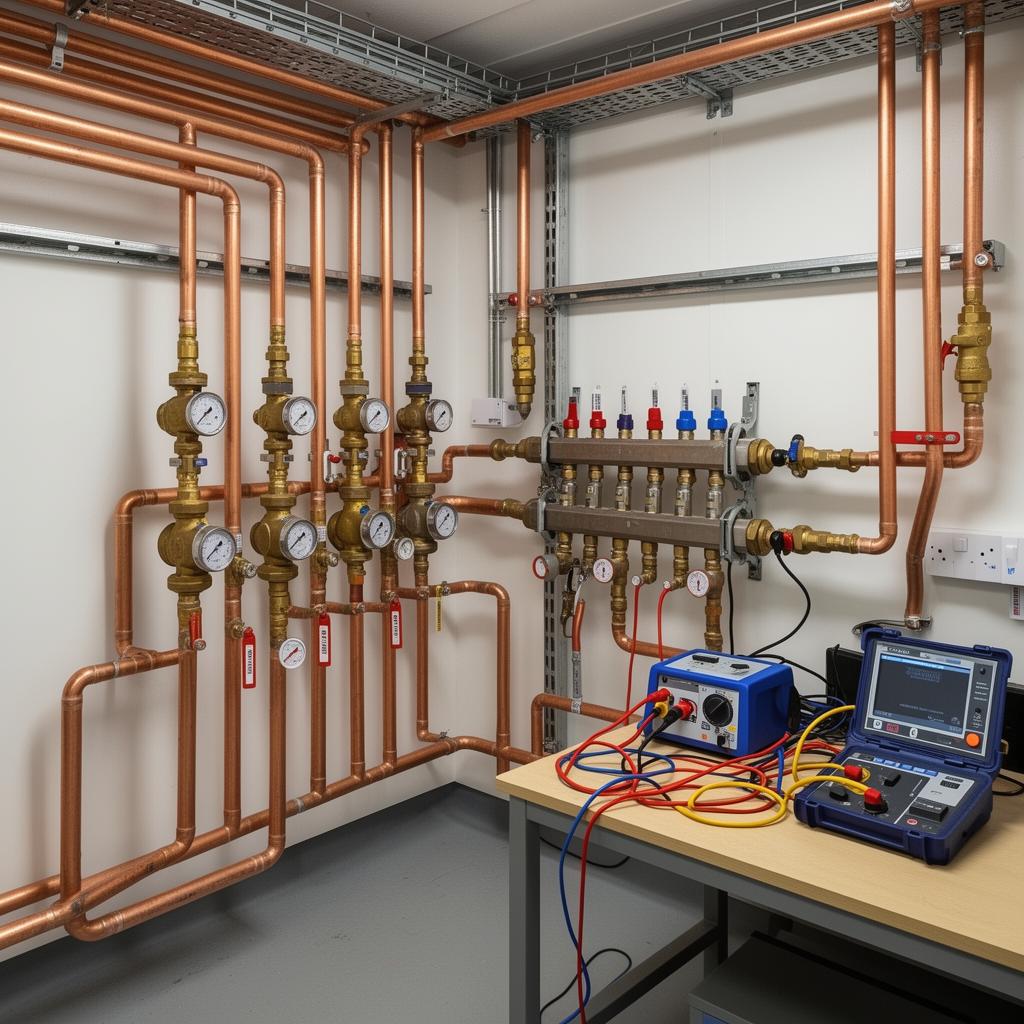
Gas Testing Earlsfield for Commercial Premises
Commercial gas testing establishes whether an installation is gas-tight and whether connected appliances can operate safely within their intended conditions. The scope depends on your premises: a restaurant kitchen, a shop with a gas boiler and a larger workplace can require different tests, equipment and engineer competencies.
For businesses around Garratt Lane and Earlsfield station, we discuss the appliances, meter arrangement, reported faults and available records before agreeing the visit. Tell us whether you need a planned safety inspection, investigation of a suspected leak, testing after alterations or checks before bringing an installation back into use.
If your search was gas safe testing earlsfield, the important distinction is between checking pipework integrity and inspecting appliance safety. One does not automatically cover the other. We explain what your appointment includes and identify any additional work needed before a meaningful safety record can be issued.
Working Around Earlsfield’s Shops, Kitchens and Workplaces
Garratt Lane has a mix of shops, cafés, restaurants and residential accommodation, while the streets around Earlsfield station include Victorian and Edwardian terraces, converted properties and commercial units. Mixed-use buildings need particular attention to access, appliance locations and the boundary between commercial and residential gas supplies.
We cover Earlsfield addresses in SW18, including premises around Garratt Lane, Magdalen Road and the approaches to the River Wandle. A postcode alone does not establish installation type: provide the full address, business use and details of any shared entrance or meter cupboard when arranging testing.
Earlsfield Access and Parking Arrangements
Parking restrictions and loading controls vary by street and time, so access should be checked against current Wandsworth signage. Let us know about rear service entrances, restricted delivery periods or meters reached through another occupier’s space. This helps plan testing without obstructing neighbouring businesses or access routes.
Older and Altered Buildings in Earlsfield
In converted premises, gas routes may pass through areas outside the trading unit. We need authorised access to relevant isolation points and inspection locations. Where a building is listed or within a conservation area, proposed external flue alterations may require separate consent; testing itself does not authorise those alterations.
What Commercial Gas Testing Includes
The engineer first establishes the installation layout, gas type, meter details, connected load and accessible isolation arrangements. Available drawings and previous records help define the test boundary. A visual inspection considers exposed pipework, supports, signs of damage, emergency controls and relevant appliance connections.
A tightness test uses suitable calibrated instruments and a procedure appropriate to the installation. Test pressure, stabilisation time, duration and acceptance criteria depend on factors including operating pressure and installation volume. A small domestic-style procedure must not simply be applied to a larger commercial pipework system.
Where appliance checks are included, assessment can cover inlet and operating pressures, gas rate or heat input where appropriate, combustion performance, flame supervision, ventilation and flue effectiveness. Catering installations may also require checks of gas interlocks and emergency shut-off arrangements. Not every test applies to every appliance.
Testing may require appliances to be shut down and the supply isolated. We agree this with the responsible person, explain the operational impact and follow the appropriate procedure for restoring the supply and checking safe operation afterwards.
Gas Safety Regulations and Relevant Standards
The Gas Safety (Installation and Use) Regulations 1998, as amended, provide the principal framework for gas safety in many workplaces and premises. Their application depends on the setting and work involved. Employers and those controlling premises also have wider duties to manage risks and maintain gas equipment safely.
Commercial testing procedures are selected using the relevant standards, including IGEM/UP/1 or IGEM/UP/1A for tightness testing and purging where applicable. IGEM/UP/2 is relevant to installation pipework, while BS 6173 addresses gas-fired catering installations. The engineer selects the applicable requirements rather than treating every system as identical.
Gas Safe registration must cover the actual work being undertaken. Commercial catering, non-domestic heating and different gas types require appropriate competencies. You can check an engineer’s Gas Safe ID card and registration categories. Registration alone should not be taken as evidence that someone is qualified for every commercial appliance.
Safety Records and Commercial Gas Certificates
Documentation should describe what was inspected or tested, the appliances or pipework covered, relevant results and any defects or restrictions. A certificate is not a substitute for an adequately scoped inspection, and an installation cannot be declared safe merely because a form has been requested.
For commercial catering, a CP42 is a commonly used gas safety inspection record. A landlord gas safety record, often called a CP12, serves a different purpose where landlord duties apply; it is not a universal commercial certificate. Pipework tightness testing may require its own test record alongside appliance inspection documentation.
Inspection frequency depends on applicable legal duties, manufacturer instructions, risk assessment and any lease or insurer requirements. Do not assume that every commercial installation has the same statutory annual certification requirement. We can clarify the inspection scope, while responsibility for wider premises compliance remains with the relevant dutyholder.
Unsafe Findings and Suspected Gas Escapes
If testing identifies an unsafe condition, the engineer explains the finding and follows the current Gas Industry Unsafe Situations Procedure where applicable. This may involve warning notices, recommending that equipment is not used, and seeking permission to isolate or disconnect an unsafe appliance or installation.
If you smell gas or suspect an escape, do not wait for a routine appointment. Avoid flames and operating electrical switches, leave the affected area and call the National Gas Emergency Service on 0800 111 999 from a safe place. Turn off the gas at the emergency control only if safe.
Arrange Your Earlsfield Gas Testing Visit
Call 0208 935 5572 to discuss commercial gas testing in Earlsfield. Enquiries are open 24 hours, seven days. Have your address, appliance list, reason for testing and preferred shutdown window ready. Appointment availability and the work required are confirmed after discussing the installation; no fixed arrival time is implied.
Gas Testing in Earlsfield: frequently asked questions
What should I prepare before gas testing earlsfield?
- Provide previous gas records, appliance details and access to meters, isolation valves and relevant rooms. Nominate someone authorised to approve shutdowns and discuss any defects.
Can an Earlsfield restaurant remain open during testing?
- Possibly, but affected gas appliances may need to be unavailable. Agree the test scope and shutdown window beforehand; continued trading must not compromise safe testing.
Does a tightness test include every appliance safety check?
- No. Tightness testing checks installation integrity within a defined boundary. Appliance combustion, ventilation, flue and safety-device checks require an appropriately scoped inspection.
Do you take Earlsfield enquiries outside business hours?
- Yes. Call 0208 935 5572 at any time, seven days a week. Attendance depends on availability and the work required. Suspected gas escapes need the emergency service.
Need a commercial gas engineer in London?
Gas Safe registered commercial engineers, 24 hours a day. Call now or book online and we'll confirm a time.