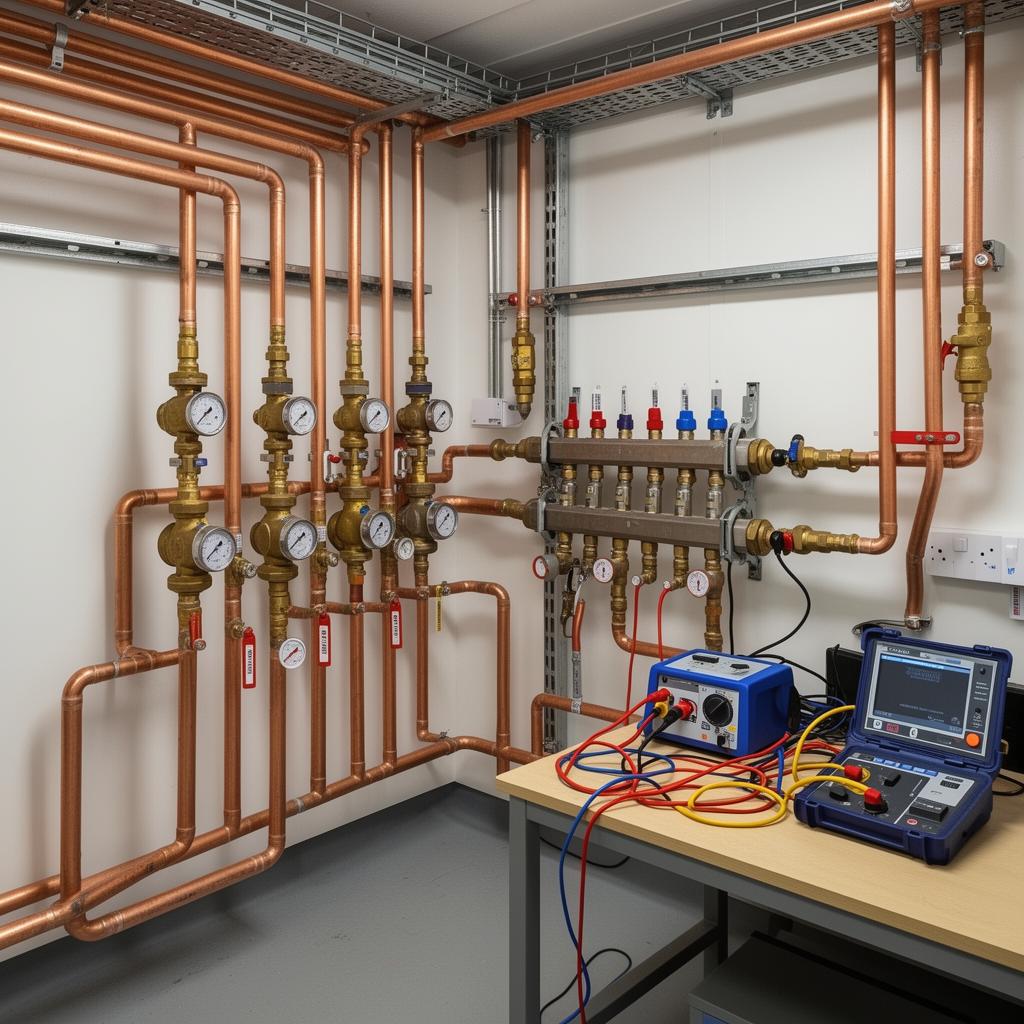
Gas Purging Ealing for Commercial Premises
Gas purging safely replaces the contents of gas pipework during commissioning, alteration or decommissioning. Introducing gas into an air-filled installation, or removing gas before work, requires a controlled procedure to prevent an uncontrolled flammable mixture. It is not simply opening a valve and waiting until gas can be smelled.
In Ealing, relevant premises include restaurant kitchens around Ealing Broadway, commercial buildings along Uxbridge Road and larger sites in the wider borough. Whether the installation serves catering appliances or a gas-fired boiler room, the method depends on pipework volume, operating pressure, gas type and the work being undertaken.
Ealing Sites with Shared Occupation
Shops and restaurants beneath flats need particular care when planning gas isolation and discharge arrangements. Shared entrances, occupied upper floors and neighbouring businesses must be considered. We discuss responsibilities with the person controlling the premises before agreeing the work boundary and any interruption to gas supplies.
When Commercial Pipework Needs Purging
Purging may be required before a new gas installation enters service, following extensions or modifications, or when redundant pipework is taken out of use. It can also form part of reinstatement after a shutdown. The requirement is assessed against the actual installation rather than assumed from the appliance count alone.
Commissioning normally involves confirming that the installation is suitable, completing the required testing and replacing air with gas using the selected procedure. Decommissioning involves isolating the relevant supply and removing gas to the specified safe condition. Larger or more complex systems may require an inert-gas stage rather than a direct purge.
Purging does not repair leaks or establish appliance safety by itself. Defects identified during assessment or testing need to be addressed before the affected installation can progress safely to the next stage.
Gas Regulations, IGEM Standards and Competence
Work must meet applicable duties under the Gas Safety (Installation and Use) Regulations 1998, as amended. The engineer undertaking the work must hold the relevant competence and Gas Safe registration categories for the installation involved. Commercial catering, different gas types and particular appliance classes can require different registration categories.
The applicable IGEM/UP standard is selected according to the installation and scope. IGEM/UP/1 covers strength testing, tightness testing and direct purging of industrial and commercial gas installations. IGEM/UP/1A addresses tightness testing and direct purging of qualifying small, low-pressure industrial and commercial installations. Their scope limits matter; one procedure does not suit every site.
Where appropriate, the assessment also considers dangerous substances and explosive atmospheres requirements. The current applicable procedures, installation details and risk assessment determine the equipment, controls and acceptance criteria. A telephone description helps establish the brief but cannot replace necessary checks on site.
Planning Safe Gas Purging in Ealing
Planning begins with identifying the supply, isolation points, pipe routes and connected equipment. Available drawings are checked against site conditions, and the relevant pipework volume and pressure are established. Unidentified branches, inaccessible valves or uncertain connections must be resolved rather than treated as harmless assumptions.
The purge arrangement needs a suitable discharge location, controlled access and protection from ignition sources. Windows, doors, air intakes, neighbouring property and public routes all influence the assessment. Gas concentrations are checked with suitable instruments against the selected procedure; smell is not an acceptable measure of completion.
Ealing Broadway Access and Public Safety
Around Ealing Broadway station, The Broadway and High Street, busy pavements and servicing activity can constrain positioning and access. A frontage or rear yard is not automatically a safe discharge point. We establish whether the proposed arrangements can protect customers, pedestrians and neighbouring occupiers throughout the work.
Local Buildings, Parking and Site Coordination
Ealing's commercial premises range from converted buildings around the town centre to industrial units in Southall and Greenford. Older mixed-use properties can have gas routes through basements, service passages or later extensions. Larger premises may have separate metered supplies, so the correct installation boundary needs clear identification.
Ealing W5 and West Ealing W13 addresses can involve controlled parking, loading restrictions and limited rear access. Southall UB1 and UB2 and Greenford UB6 sites may offer different servicing arrangements, but vehicle access still needs confirmation. Please provide any loading instructions, entry restrictions and landlord requirements when booking.
Conservation Areas and Sensitive Locations
Locations around Ealing Green and Haven Green include conservation areas. If permanent changes to external gas pipework or associated installations are proposed, relevant permissions may need checking. Conservation status does not reduce gas safety requirements; it makes early coordination with the owner and, where necessary, the planning authority important.
Testing, Records and Gas Safety Certificates
Testing and purging are related but distinct activities. Strength testing, where required, assesses integrity at the prescribed test conditions. Tightness testing checks for leakage using the applicable method. Purging then changes the pipework contents under controlled conditions. Records should identify the installation covered and the work actually completed.
Documentation should include relevant test results, purge details, limitations and any defects or outstanding actions. A testing and purging record is not a substitute for an appliance inspection or a complete commercial gas safety assessment. Likewise, an appliance service record alone does not demonstrate that altered distribution pipework has been correctly tested and purged.
For commercial kitchens, a CP42 commercial catering gas safety record may be relevant where the corresponding inspection is included. CP-numbered forms are industry documentation formats, not universal statutory certificate titles. We clarify which records match your agreed scope before work starts.
Arrange Your Ealing Gas Purging Assessment
Call 0208 935 5572 any time: we are open 24 hours a day, seven days a week. Tell us the Ealing address, business use, reason for purging and whether the gas installation is currently live. Drawings, meter information and known pipe sizes help define the initial assessment.
Please identify the site contact, permitted shutdown periods and any shared supplies. Attendance and the working arrangements are confirmed individually; round-the-clock availability does not mean every installation can be purged immediately.
Gas Purging in Ealing: frequently asked questions
Can you arrange gas purging ealing outside trading hours?
- Yes, out-of-hours work can be discussed through our 24-hour telephone line. The agreed slot depends on access, safe discharge arrangements, isolation permissions and the installation's requirements.
Do Ealing restaurants need purging after every gas appliance service?
- Not automatically. The requirement depends on whether pipework has been opened, altered or left containing air, and on the applicable procedure. Routine servicing and pipework purging have different purposes.
Can you quote the scope from photographs alone?
- Photographs can help, but they may not show concealed branches, accurate dimensions or safe discharge options. A site assessment may be needed before the method and scope can be confirmed.
What should I do if I smell gas?
- Treat a suspected leak as an emergency, not a routine purging booking. Avoid flames and electrical switches, leave the affected area and call the National Gas Emergency Service on 0800 111 999 from a safe place.
Need a commercial gas engineer in London?
Gas Safe registered commercial engineers, 24 hours a day. Call now or book online and we'll confirm a time.