Commercial Gas Engineers Southwark
Southwark brings together restaurant kitchens, railway-arch businesses, hotels, offices and larger institutional premises. A food business around Borough Market has different gas requirements from an office boiler room near London Bridge or a communal plant room serving a mixed-use building. We establish the appliances, gas supply and operating conditions before recommending work.
Our commercial gas services cover appliance servicing, breakdown investigation, gas installation pipework, replacement gas appliances and commissioning. The scope is agreed around your equipment and premises rather than a generic checklist. Tell us whether your site uses natural gas or LPG so the required engineer registration categories can be checked before attendance.
Gas Services for Southwark Kitchens and Hospitality
Borough High Street, Bermondsey Street and the streets around Bankside support a substantial hospitality mix. Commercial cooking equipment here may include gas ranges, fryers, griddles and ovens. Service checks follow manufacturer instructions and consider burner condition, ignition, flame supervision, operating pressures and safe combustion, alongside the installation conditions affecting each appliance.
Kitchen gas safety depends on more than whether a burner lights. We assess combustion air provision and, where applicable, the gas safety interlock associated with mechanical ventilation. We check that gas is prevented from flowing when the required ventilation conditions are not met. Any ventilation deficiencies affecting gas safety are identified, without extending the work into unrelated trades.
Planning Gas Work Around Southwark Trading Hours
For kitchens near Borough Market or along Tooley Street, agree shutdown arrangements with the person responsible for trading. We discuss which gas appliances need isolating, whether other users share the supply and how safe recommissioning will be confirmed. Clear access to appliance isolation valves and the emergency control valve helps avoid unnecessary disruption.
Commercial Gas Boiler Servicing and Fault Diagnosis
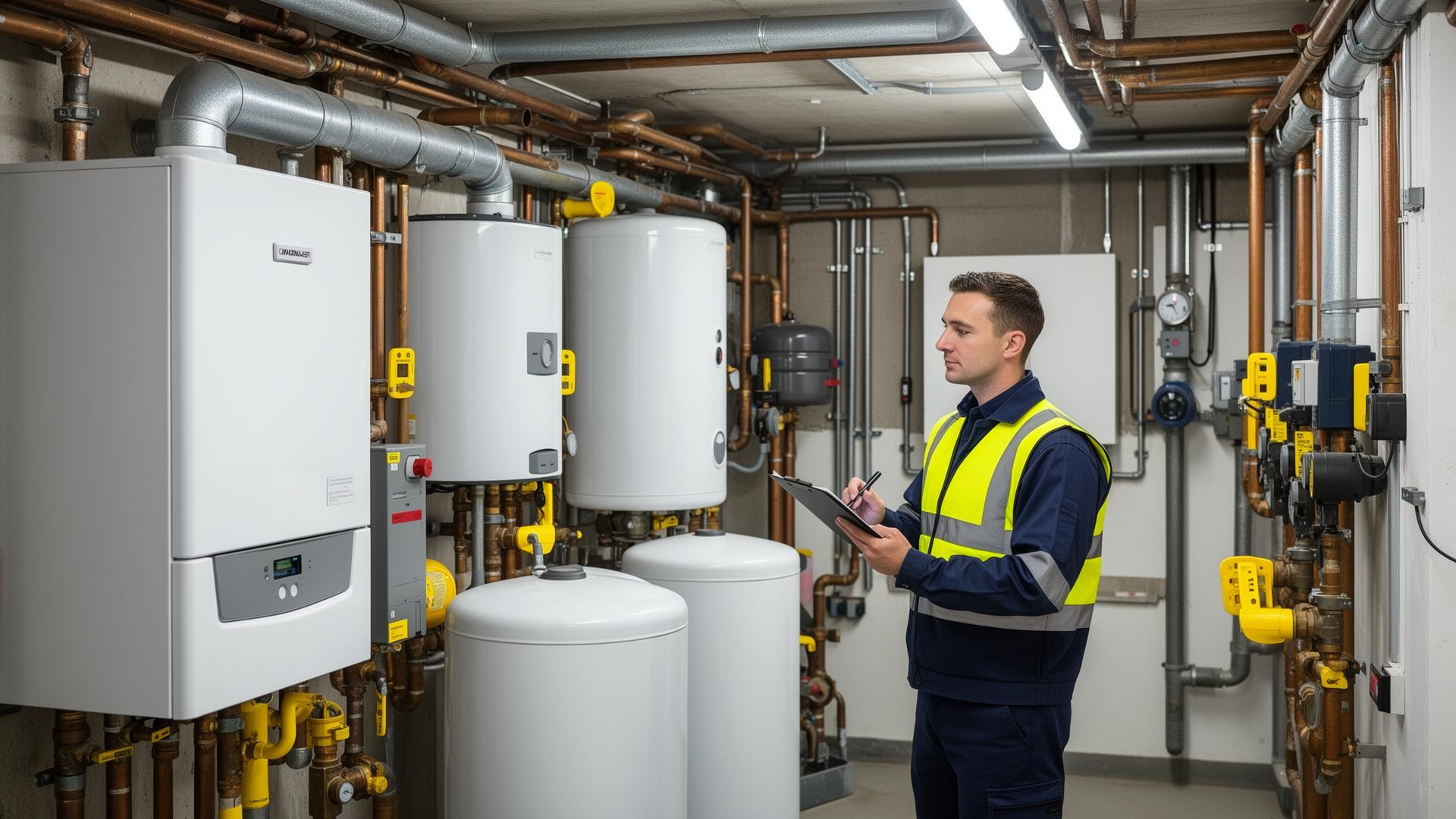
Commercial gas boilers and gas-fired water heaters require checks suited to their design, output and manufacturer requirements. Servicing can include burner inspection, ignition and flame detection checks, combustion analysis, gas pressure measurements and assessment of accessible flue components. Where appliances operate in a cascade, individual units and their gas-related sequencing need consideration.
Repeated lockouts, unstable flames or combustion readings outside acceptable limits need diagnosis rather than repeated resets. We investigate potential gas-side causes such as inadequate inlet pressure, burner contamination, faulty gas valves or ignition components. Findings determine whether an adjustment, gas component replacement or further investigation is appropriate.
Plant rooms in hotels, offices and larger premises around London Bridge and Elephant and Castle may serve several occupiers. Before interrupting the gas supply, establish who controls the plant room, which appliances are affected and who can authorise the shutdown. Work remains focused on gas equipment and its safe operation.
Gas Safety Regulations, Standards and Certificates
Commercial gas work must be undertaken by a Gas Safe registered engineer competent for the particular appliance and work category. Ask to see the engineer’s ID card and check its categories, not just the registration number. The Gas Safety (Installation and Use) Regulations 1998 apply where relevant, alongside other duties governing workplace and installation safety.
Applicable standards depend on the installation. IGEM/UP/1 and related procedures address strength testing, tightness testing and purging of relevant installations. IGEM/UP/2 concerns installation pipework, while IGEM/UP/19 addresses interlocking gas supplies with mechanical ventilation and associated requirements in commercial kitchens. The appropriate current documents and manufacturer instructions guide the agreed work.
Paperwork should identify what was examined, test findings and any defects or restrictions. A CP42 is commonly used for commercial catering gas safety inspections; a CP17 is commonly used for non-domestic gas safety reporting. These form references are not interchangeable blanket approvals. Legal inspection duties and appropriate servicing intervals depend on the premises, responsibilities and equipment.
Gas Pipework Installation, Testing and Commissioning
Adding a gas appliance can change the demand on an existing installation. Before extending pipework, we assess connected load, available supply pressure, pipe sizing and the proposed route. Existing pipework should not be assumed suitable simply because it supplied a smaller appliance. Any limitations requiring discussion with the gas supplier or network operator are explained.
Gas installation work can involve new distribution pipework, appliance connections, isolation arrangements and removal of redundant gas branches. Testing and purging procedures are selected for the installation’s pressure, volume and characteristics. Commissioning includes relevant operating and combustion checks, with results recorded and safe operating information provided to the responsible person.
Southwark Premises with Shared Gas Supplies
Converted buildings along Borough High Street and mixed-use premises across SE1 can have complicated ownership and access arrangements. We establish the meter location, accessible isolation points and the extent of the installation being worked on. Shared supplies require coordinated isolation so neighbouring occupiers are not inadvertently left with interrupted or unsafe gas equipment.
Southwark Access, Parking and Building Constraints
We cover commercial premises across Southwark, including Bankside and Bermondsey in SE1, Rotherhithe in SE16, Peckham in SE15 and Camberwell in SE5. Postcode districts cross borough boundaries, so provide the full site address. Include the entrance used for deliveries or maintenance if it differs from the public-facing address.
Access around London Bridge, Borough Market and busy routes such as Southwark Street can require advance coordination. Loading restrictions, controlled parking and red-route controls on relevant roads affect where vehicles can stop. Confirm current signs, loading arrangements and any private service-yard permissions rather than assuming parking is available outside.
Historic premises in conservation areas, including around Bermondsey Street, can need additional checks before external gas pipework or flue alterations. Listed status may introduce further consent requirements. We discuss proposed routes and penetrations early so the client can establish necessary landlord approvals and planning or listed-building permissions before installation.
24-Hour Commercial Gas Enquiries and Urgent Safety
Call 0208 935 5572 at any time, seven days a week, for commercial gas enquiries. Have the site address, appliance details, fault symptoms and access arrangements ready. Availability and the next practical steps are discussed when you call; urgent enquiries do not remove the need for proper safety assessment.
If you smell gas, stop using appliances, avoid flames and electrical switches, and leave the affected area. Turn off gas at the emergency control valve only if safe. Call the National Gas Emergency Service on 0800 111 999 from a safe location. Do not reuse affected equipment until it has been declared safe.
Commercial Gas Engineers in Southwark: frequently asked questions
Do commercial gas engineers southwark work outside normal business hours?
- Telephone enquiries are open 24 hours a day, seven days a week. Call to discuss access, shutdown requirements and engineer availability for your premises.
Which certificate does a Southwark restaurant need?
- A CP42 commonly records commercial catering gas safety checks. The correct documentation depends on the equipment and inspection scope; confirm any landlord or insurer requirements beforehand.
Can you check existing pipework before adding another gas appliance?
- Yes. The assessment considers total gas demand, pipe sizing, supply pressure and installation condition before deciding whether the existing supply arrangement is suitable.
What should I prepare before a commercial gas visit?
- Provide appliance details, previous gas records and known faults. Arrange authorised access to meters, isolation valves and appliances, and identify anyone affected by a gas shutdown.
Need a commercial gas engineer in London?
Gas Safe registered commercial engineers, 24 hours a day. Call now or book online and we'll confirm a time.