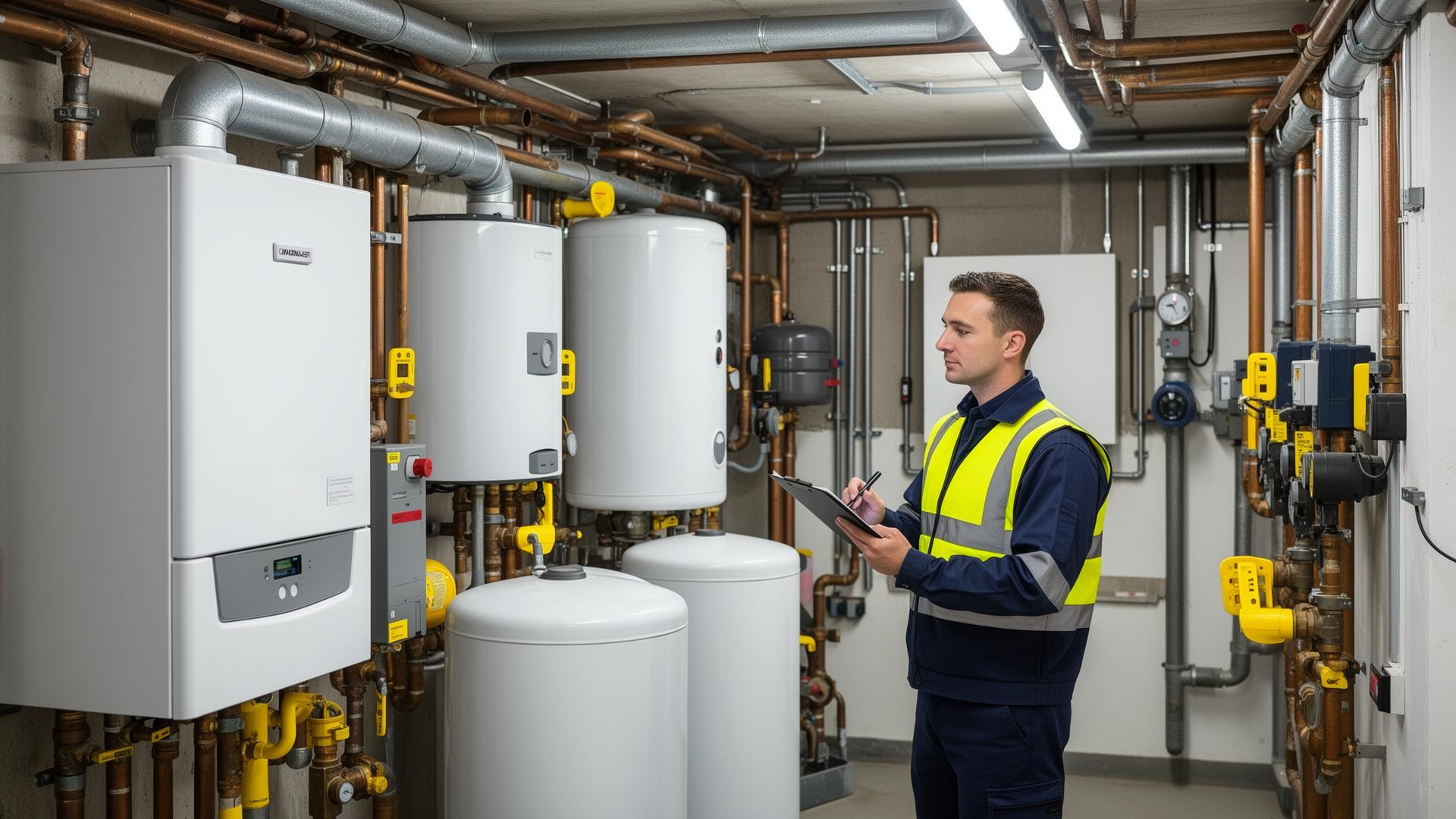
What Commercial Gas Contracts Usually Cover
Commercial gas contracts are engineering maintenance agreements, not gas supply or energy tariffs - they're sometimes confused with supplier contracts, but here we mean a schedule of planned servicing and safety work carried out by a Gas Safe registered engineer. A typical contract sets out which appliances are included, how often each is serviced, what paperwork is produced after each visit, and how call-outs for faults are handled between scheduled visits.
Because every site has a different mix of boilers, water heaters, catering equipment and pipework, the exact content of a commercial gas contract varies. Some businesses want a single annual safety inspection bundled with reactive call-out cover, while others need quarterly servicing on heavily used catering equipment plus a separate warm air heater schedule for a warehouse area.
Why Businesses Use a Maintenance Contract Rather Than One-Off Visits
A one-off visit deals with whatever is in front of the engineer on the day, whereas a maintenance contract is built around keeping appliances serviced on a planned cycle, which can help catch developing issues before they lead to a breakdown. For businesses that depend on continuous hot water, heating or cooking gas - restaurants, hotels, care homes, schools - unplanned downtime can be disruptive, so having an agreed response time and a known engineer familiar with the site is often valued.
Contracts also simplify budgeting and compliance record-keeping, since servicing visits, CP paperwork and any remedial work are tracked together rather than scattered across invoices from different call-outs over the year.
Typical Elements of a Commercial Gas Contract
Scheduled Servicing and Inspection
Planned visits at agreed intervals to service appliances, check pipework and issue updated safety paperwork, timed to suit your trading patterns and any manufacturer servicing recommendations.
Reactive Call-Out Cover
Agreed response arrangements for faults or breakdowns that occur between scheduled visits, including how call-outs are logged and prioritised.
Parts and Remedial Work
How replacement parts and remedial work identified during servicing are quoted and approved, which can be agreed up front to avoid delays when something needs fixing.
Record-Keeping and Compliance Paperwork
A central record of CP forms, service history and any remedial actions, which can support your own health and safety and insurance documentation.
Who Typically Needs a Commercial Gas Maintenance Contract
Multi-site operators, property managers, restaurants, hotels, schools and care homes often find a contract useful because it brings consistency across sites and avoids the admin of arranging separate visits each time. Smaller single-site businesses can also benefit, particularly where continuity of gas supply matters to trading, though a contract isn't a legal requirement in itself - the underlying duty is to keep appliances maintained in a safe condition, and a contract is simply one way of managing that duty in a structured way.
Agreeing the Scope of Commercial Gas Contracts
Before setting up commercial gas contracts, we survey the premises to list every appliance, note any access constraints, and discuss your preferred visit frequency and response expectations. We then put together a schedule and terms for your review, so you know exactly what's included - and what isn't - before signing up, rather than discovering gaps when something goes wrong.
Reviewing and Renewing Commercial Gas Contracts
Commercial gas contracts are usually reviewed periodically rather than left unchanged indefinitely, since appliance mix, trading hours and premises use can all shift over time. At renewal, it's worth checking whether the appliance list still matches what's actually installed, whether visit frequency still suits current usage, and whether response times remain appropriate given any changes to how the premises operates. Updating the contract at this point avoids paying for cover that no longer matches the site, or discovering gaps in coverage when something goes wrong.
If a new appliance is installed partway through a contract term, it's sensible to notify your maintenance provider so it can be added to the schedule and covered by the same call-out terms, rather than being serviced separately outside the agreed arrangement.
Common Questions When Setting Up a Contract
Businesses considering commercial gas contracts for the first time often ask similar questions: what happens if an appliance fails outside scheduled hours, whether emergency call-outs are included or charged separately, how quickly paperwork is issued after each visit, and what notice is needed to add or remove appliances from the schedule. Having clear answers to these questions before signing helps avoid misunderstandings later, and we're happy to talk through each point as part of agreeing terms.
Ending or Switching a Commercial Gas Contract
If a commercial gas contract needs to end or move to a new provider, giving reasonable notice as set out in the agreed terms allows time to arrange a handover, pass on appliance records and service history, and avoid a gap in cover between providers. Keeping copies of all CP paperwork and service records yourself, rather than relying solely on the outgoing provider, makes any transition smoother for whoever takes over maintenance of the site.
Commercial Gas Contracts for Ongoing Maintenance: frequently asked questions
Do commercial gas contracts cover gas supply or energy prices?
- No. Commercial gas contracts as described here are engineering maintenance agreements covering servicing, inspection and call-out, not gas supply tariffs or energy pricing.
How often are appliances serviced under a commercial gas contract?
- Frequency is agreed based on appliance type, usage and manufacturer guidance; some appliances may be serviced annually, others more often depending on how heavily they're used.
Can a commercial gas contract include multiple sites?
- Yes, contracts can be arranged across multiple premises, with a consolidated schedule and record-keeping for each site.
Are repairs included in commercial gas contracts?
- This depends on the terms agreed; some contracts include minor remedial work while larger parts or repairs are typically quoted separately.
How do I set up commercial gas contracts for my business?
- Call 0208 935 5572 and we'll arrange a survey of your premises before proposing a maintenance schedule and terms.
Need a commercial gas engineer in London?
Gas Safe registered commercial engineers, 24 hours a day. Call now or book online and we'll confirm a time.