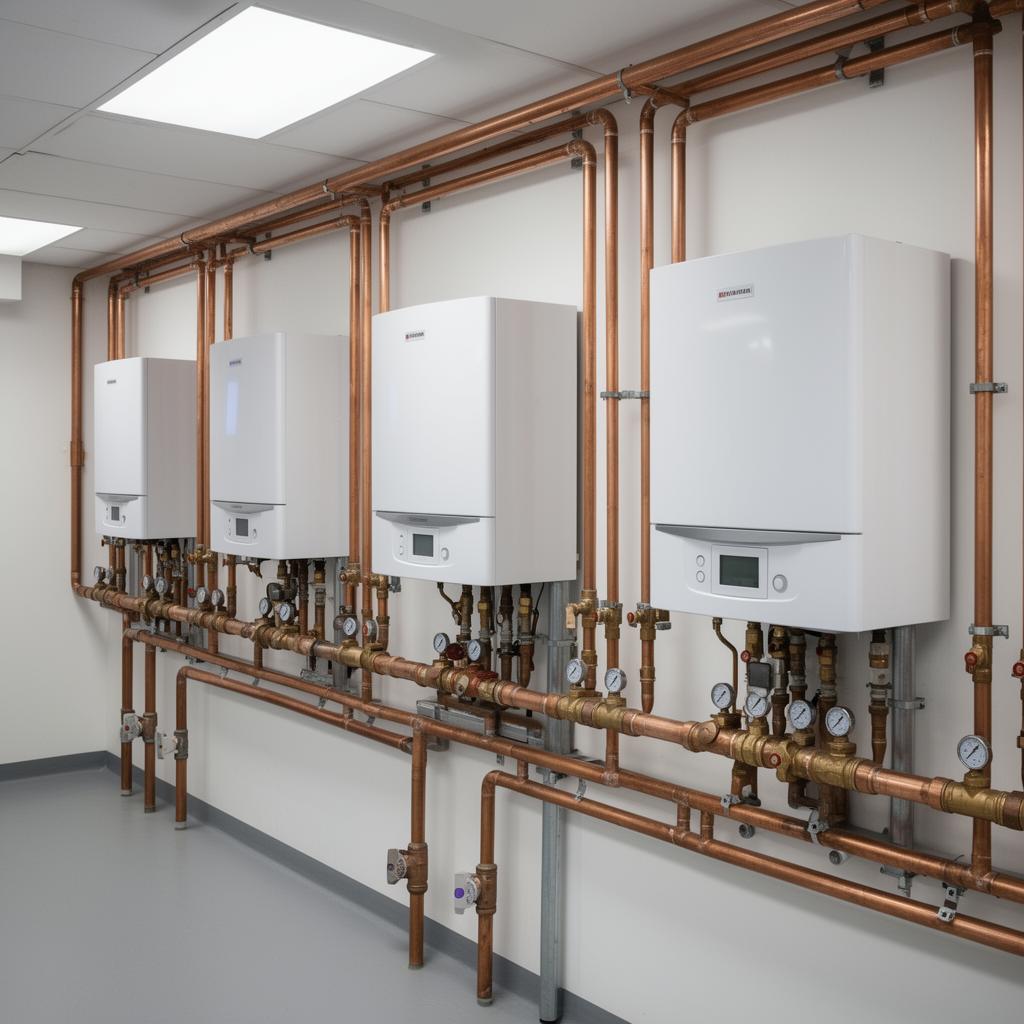
Why Commercial Boiler Replacement Cost Varies So Widely
Commercial boiler replacement cost is shaped by far more variables than a domestic boiler swap, which is why we avoid quoting a single headline figure. The output required for your building, whether you need a single large boiler or a cascade of smaller modular units, the type of boiler (condensing, non-condensing, modulating or fixed-output), and whether the new unit is a like-for-like swap or a significant upgrade all change the scope of work and therefore the price.
A straightforward replacement of an existing boiler with a similar model, using the existing flue, pipework and gas supply, is a far simpler job than installing a new cascade system that requires upgraded gas pipework, a new flue run, and additional pump and control wiring. Both are described as a 'commercial boiler replacement', but the labour, materials and time involved can differ substantially.
Key Factors That Affect Cost
Boiler Output and System Type
The required heat output, usually measured in kW, is driven by the size and use of your building. A single large commercial boiler and a cascade of several smaller modular boilers can both meet the same total output, but they have different installation requirements, footprints and maintenance needs, which affects both the equipment cost and the labour involved in fitting them.
Existing Pipework, Flue and Gas Supply
If the existing gas pipework, flue route and electrical supply can be reused without modification, replacement is more straightforward. Where the new boiler has a higher gas demand than the old one, the gas pipe sizing, meter capacity, or even the gas supply itself may need upgrading, and flue routes sometimes need rerouting to meet current regulations and manufacturer instructions, both of which add to the job.
Removal and Access
Removing an old boiler safely, especially a large or cast-iron unit located in a basement plant room or on a roof, can require specific lifting equipment or additional labour. Access constraints - narrow doorways, stairs, confined plant rooms - affect how quickly the old unit can be removed and the new one installed, which feeds into the overall price.
Controls, Commissioning and Compliance
A replacement project usually includes commissioning the new boiler, setting up or integrating controls such as building management system (BMS) interfaces, weather compensation or multiple zone controls, and completing commissioning paperwork and gas safety documentation. More sophisticated control integration adds engineering time beyond simply fitting the boiler itself.
Like-for-Like Replacement vs Upgrade
A like-for-like commercial boiler replacement, where the new unit matches the old one's output, fuel type and broadly similar footprint, is usually the quickest and most predictable type of job, since much of the existing infrastructure can often be reused. An upgrade - for example moving from an ageing non-condensing boiler to a modern condensing or modulating system, or increasing capacity because the building's demand has grown - is a bigger undertaking and typically involves more design work before installation even begins.
It is worth asking your engineer whether a like-for-like swap is genuinely the most efficient long-term option, since older non-condensing boilers can be considerably less efficient to run than modern condensing equivalents; weighing running costs against the higher upfront cost of an upgrade is a decision worth discussing properly rather than defaulting to the cheapest immediate option.
How We Quote Commercial Boiler Replacement Cost
Because of the number of variables involved, we assess your existing boiler, plant room, pipework and building heat demand before confirming commercial boiler replacement cost. This typically involves a site survey to check access, flue routing, gas supply capacity and any electrical or controls work needed, followed by a written quotation that sets out exactly what is included - supply, installation, commissioning, certification and removal of the old unit.
We would rather spend time understanding your specific building than publish a generic price range that does not reflect what your premises actually needs. If your boiler has broken down and you need an emergency assessment before deciding on replacement, that is a separate, faster process to establish whether repair or replacement makes more sense.
Minimising Disruption During Replacement
For many commercial premises - hotels, care homes, restaurants - continuity of heating and hot water during the changeover is as important as the cost itself. Phased installation, temporary boiler hire for critical applications, or scheduling the bulk of the work outside trading hours are all options worth discussing at the quoting stage if your business cannot tolerate extended downtime.
Signs a Commercial Boiler May Need Replacing
Frequent breakdowns, rising repair costs, declining efficiency, or difficulty sourcing spare parts for an older boiler are common signs that replacement may be more sensible than continued repair. An engineer can help assess whether ongoing repair costs are starting to outweigh the benefit of keeping an ageing boiler running, which is a useful way to frame the replacement decision rather than relying on age alone.
Planning a Boiler Replacement Project
A commercial boiler replacement usually involves more than swapping one unit for another; pipework, flue routing, controls and sometimes plant room layout may need reviewing to suit a new boiler, particularly if moving from an older non-condensing design to a modern condensing one. Planning the project with a site survey first helps identify any additional work needed so the overall commercial boiler replacement cost reflects the full scope rather than just the appliance itself.
Commercial Boiler Replacement Cost: What Affects the Price: frequently asked questions
What is the typical range for commercial boiler replacement cost?
- We don't publish a figure because output, boiler type, pipework and access vary so much between sites; a survey lets us give you an accurate price for your specific building rather than a generic estimate.
Does commercial boiler replacement cost include removing the old boiler?
- Removal and safe disposal of the old unit is usually included in a replacement quote, but it is worth confirming this is explicitly stated before accepting any quotation.
Is a cascade system more expensive than a single large boiler?
- It depends on the building; cascades can cost more upfront but may offer efficiency and resilience benefits, so it's worth discussing both options against your specific commercial boiler replacement cost and running needs.
Will commercial boiler replacement cost increase if the gas supply needs upgrading?
- Yes, if the new boiler's gas demand exceeds what the existing pipework or meter can supply, upgrading that infrastructure is additional work that adds to the overall cost.
How do I get an accurate commercial boiler replacement cost for my building?
- Call 0208 935 5572 to arrange a site survey; we'll assess your existing system and building needs before confirming a written quotation.
Need a commercial gas engineer in London?
Gas Safe registered commercial engineers, 24 hours a day. Call now or book online and we'll confirm a time.