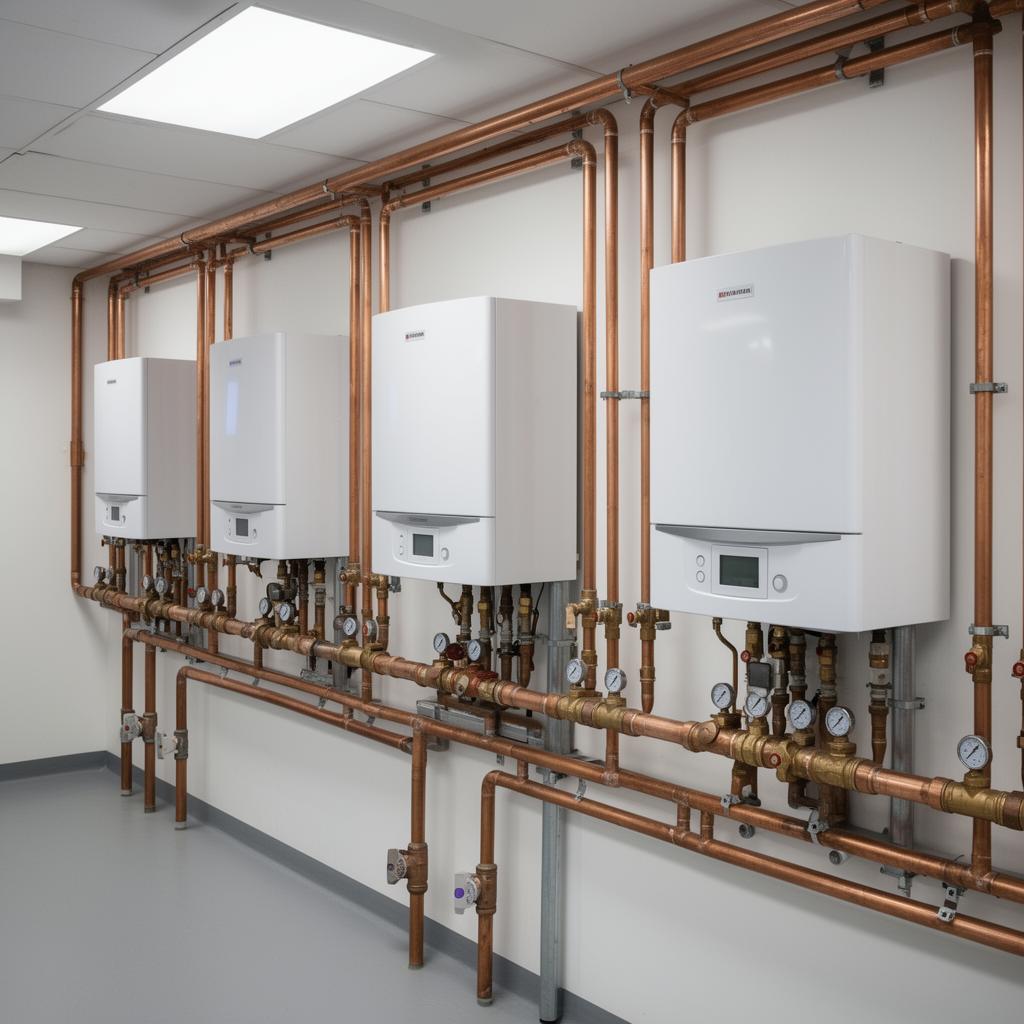
Commercial Boiler Installation Whitechapel
A commercial boiler installation needs more than an appliance selected by output. The gas supply, intended operating pattern, available plant space and safe discharge of combustion products all affect suitability. We assess these factors before defining the gas installation scope, whether you are replacing an existing boiler or proposing a different commercial gas appliance arrangement.
Whitechapel includes shops, restaurants, offices, hotels and mixed residential-commercial buildings. Their operating requirements differ: a continuously occupied property presents different shutdown constraints from an office with predictable closing hours. Our assessment identifies the information needed to specify the installation and plan gas isolation without overlooking other appliances supplied from the same meter.
Understanding Whitechapel Premises and Access
Whitechapel lies in the London Borough of Tower Hamlets, with much of the area using E1 postcodes. Whitechapel Road, Whitechapel High Street and Commercial Road contain busy commercial frontages, while surrounding streets include older terraces and converted premises. The Royal London Hospital and Whitechapel station are useful local landmarks when describing a site's location, but the exact entrance matters for an installation visit.
Whitechapel Deliveries, Loading and Plant Access
On main roads and side streets, loading restrictions, controlled parking and limited kerbside space can affect appliance deliveries. We ask about rear entrances, basement steps, shared passages and plant-room doors before scheduling work. Any parking suspension, loading permission or use of shared access must be checked with the relevant authority or property manager rather than assumed.
Gas Supply Checks and Boiler Specification
The survey establishes the proposed boiler input alongside the demand from other connected gas appliances. Existing meter capacity, available supply pressure and installation pipework must be assessed together. A larger boiler cannot simply be connected because the existing pipe reaches the plant room; pipe sizing must account for demand, route length, fittings and permissible pressure loss.
Where meter or upstream supply changes are required, these need coordination with the appropriate gas supplier, meter operator or network organisation. We distinguish those responsibilities from the downstream gas installation scope. Accessible isolation, suitable pipe supports and identification are considered, along with any requirements arising from the appliance manufacturer's instructions. Final selection depends on the surveyed conditions, not just the rating of the old boiler.
Whitechapel Flue Routes and Combustion Ventilation
A flue route must suit the selected appliance and its approved flue system. Terminal positioning needs assessment against nearby windows, air openings, boundaries and occupied spaces. In narrow yards behind Whitechapel Road or mixed-use buildings around Commercial Road, an apparently convenient wall position may not provide a suitable discharge location.
Whitechapel Conservation and Shared Buildings
Parts of the wider area have conservation designations, including the Whitechapel High Street Conservation Area. Check the individual address rather than assuming every Whitechapel property has the same restrictions. External flues may require planning consideration, listed building consent where applicable, and freeholder approval. Boiler-room combustion ventilation must also be assessed; existing grilles should not be treated as adequate without checking their purpose, free area and condition.
Gas Regulations, Competence and Installation Standards
Work is undertaken within the applicable requirements of the Gas Safety (Installation and Use) Regulations 1998. Gas Safe registration must cover the actual work: commercial appliance categories and competence are important, not registration alone. You can check an engineer's current Gas Safe ID card and the categories shown on its reverse before work starts.
Relevant IGEM/UP standards are selected for the installation and procedure involved. These can include IGEM/UP/2 for installation pipework on industrial and commercial premises, and IGEM/UP/1 or the appropriate related procedure for strength testing, tightness testing and purging. Applicable Building Regulations, manufacturer instructions and site-specific requirements also inform the work. Standards are not interchangeable checklists; appliance type, pipework volume, operating pressure and building conditions determine what applies.
Installation, Gas Testing and Commissioning
Before removal or alteration, we agree the gas isolation boundary and establish which other appliances may be affected. The installation sequence includes safe isolation, installation pipework work within the agreed scope, and the appropriate testing and purging procedures. Occupied premises need controlled access to the work area and clear communication about when gas appliances must remain out of use.
Commissioning checks follow the manufacturer's instructions and applicable procedures. They include gas pressure and input checks, combustion analysis, assessment of flue integrity and ventilation, and verification of appliance safety functions. Any unsafe condition must be addressed through the appropriate gas safety procedure. Opening around the clock does not remove the need for a survey, necessary permissions or suitable installation arrangements.
Commercial Gas Records and Handover
Handover should explain what was installed, what was tested and any limitations or outstanding matters. Keep commissioning results, appliance instructions and relevant gas safety records available for the person responsible for the premises. A commercial boiler installation record is not automatically a complete safety assessment of every gas appliance elsewhere in the building.
A CP17-style non-domestic gas safety record may be relevant to commercial boiler plant. CP42 records relate to commercial catering gas safety and are not a substitute for boiler documentation. CP12 commonly describes a landlord gas safety record; its relevance depends on the premises and applicable landlord duties. Certificate labels alone do not establish compliance: the recorded scope, findings and competent sign-off matter.
Arrange Your Whitechapel Boiler Installation Survey
For boiler installation Whitechapel enquiries, call 0208 935 5572. Our phone line is open 24 hours a day, seven days a week. Give the property address, postcode, business use and existing boiler details, together with any known gas supply restrictions or issues with the current flue route.
Tell us whether the premises are occupied during proposed working hours and who can authorise access, gas shutdowns and external alterations. Photographs of the appliance data plate, meter area and plant-room entrance can help an initial discussion, but they do not replace on-site assessment. We then establish the gas-work scope and identify matters requiring approval before installation can be arranged.
Commercial Boiler Installation in Whitechapel: frequently asked questions
What information is needed for commercial boiler installation whitechapel?
- Provide the full address, building use, existing boiler model and details of other gas appliances. Access arrangements, proposed shutdown windows and landlord or freeholder contacts are also useful. A survey confirms the installation requirements.
Can an existing flue be reused in Whitechapel?
- Only if its suitability is established for the replacement appliance. Compatibility, condition, route and terminal position need checking against manufacturer instructions and applicable requirements. An existing opening does not guarantee that reuse is safe or permitted.
Does every commercial boiler need the same certificate?
- No. Documentation depends on the appliance, work undertaken and legal context. Commissioning records and a relevant non-domestic gas safety record may be appropriate. Catering certificates and landlord records serve different purposes and should not be treated as interchangeable.
Can I call outside normal business hours?
- Yes. Call 0208 935 5572 at any time, seven days a week. Installation timing depends on the survey, appliance availability, access and necessary approvals; a 24-hour phone service is not a promise of immediate installation.
Need a commercial gas engineer in London?
Gas Safe registered commercial engineers, 24 hours a day. Call now or book online and we'll confirm a time.